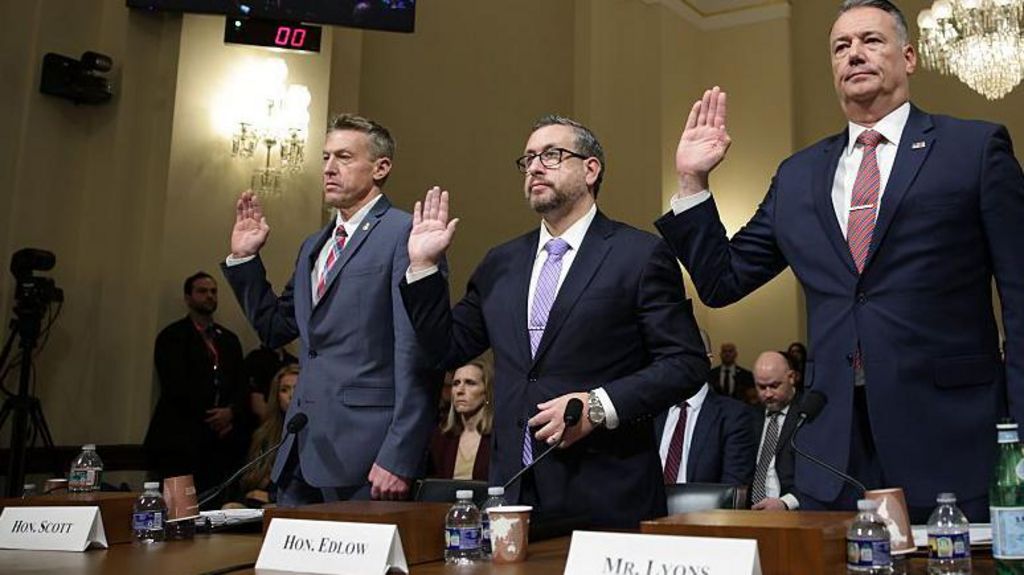
In a contentious congressional hearing on Tuesday, top US immigration officials staunchly defended President Trump’s immigration agenda while facing intense scrutiny over the fatal shooting of two American citizens. Acting Immigration and Customs Enforcement (ICE) Director Todd Lyons and Customs and Border Protection (CBP) Commissioner Rodney Scott faced sharp questioning from lawmakers across multiple fronts.
The session focused heavily on the recently implemented body camera mandate for ICE agents, announced by Homeland Security Secretary Kristi Noem. Lyons revealed that approximately 3,000 officers have already received cameras, with another 6,000 in deployment phases across the 13,000-strong field agent force. Scott indicated that roughly half of CBP’s 20,000 agents currently operate with body cameras, noting the program remains under active development.
This policy change follows the tragic deaths of Alex Pretti and Renee Good in Minneapolis last month, where both US citizens were fatally shot multiple times during enforcement operations. The incident triggered widespread outrage, particularly in Minnesota where approximately 3,000 federal agents had been deployed at President Trump’s direction to combat illegal immigration.
Officials firmly defended their Minneapolis operations, with Lyons issuing a stark warning: “Let me send a message to anyone who thinks they can intimidate us. You will fail.” He rejected claims that Americans were being deliberately targeted, despite numerous documented incidents reported by media outlets.
The hearing grew particularly heated when Congresswoman LaMonica McIver (D-NJ) questioned Lyons about his religious beliefs and moral accountability for agent-related fatalities. The exchange culminated in McIver asking if Lyons believed he was “going to hell,” prompting the committee chairman to intervene. The White House subsequently condemned McIver’s line of questioning as “seriously messed up” and inappropriate.
Additional topics included the refusal to unmask agents during operations, accelerated training schedules for ICE recruits (now operating six days weekly at 12 hours daily), and potential future involvement in election security operations. Throughout the hearing, officials declined to comment specifically on the Minneapolis shootings while maintaining unwavering support for the administration’s immigration policies.