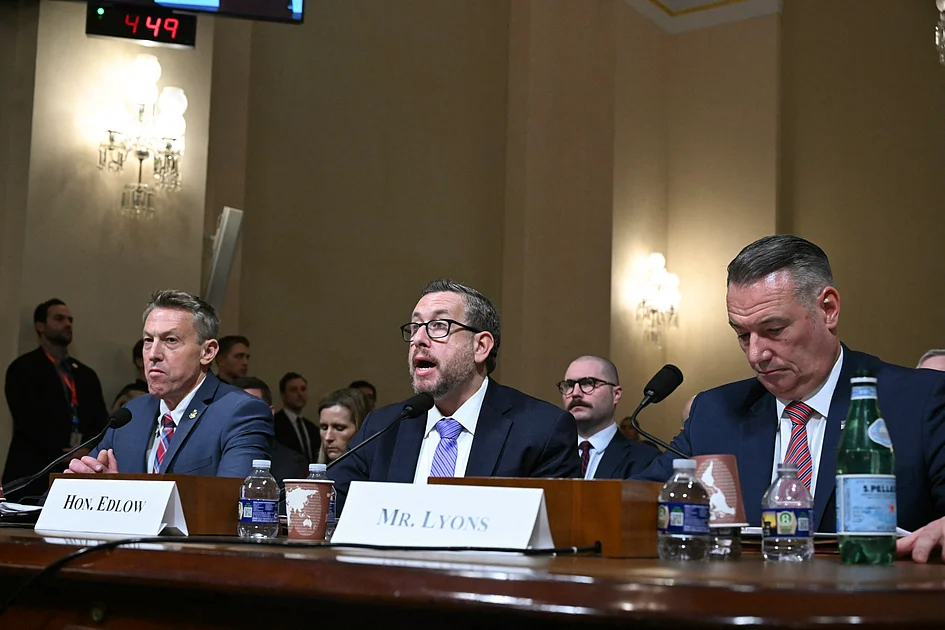
Top U.S. immigration officials appeared before Congress on Tuesday amid escalating tensions over enforcement tactics that have sparked nationwide debates. The congressional hearing followed two fatal shootings by federal officers in Minneapolis that intensified criticism of President Donald Trump’s aggressive immigration crackdown.
In a notable shift, Trump conceded that immigration enforcement might require ‘a softer touch’ following the Minneapolis incidents. The administration subsequently announced tactical concessions, including the withdrawal of hundreds of federal officers from the Midwestern city where recent operations had triggered widespread protests.
Immigration and Customs Enforcement (ICE) Acting Director Todd Lyons defended the administration’s approach in prepared testimony, stating: ‘The president tasked us with mass deportations, and we are fulfilling that mandate. Thanks to the resources provided by Congress, we are ramping up detention capacity and removal flights daily. In the last year alone, we conducted over 475,000 removals.’
Lyons testified alongside Customs and Border Protection (CBP) Commissioner Rodney Scott and Citizenship and Immigration Services Director Joseph Edlow during the Department of Homeland Security oversight hearing. Scott highlighted border security achievements, claiming CBP had ‘spent the last year rebuilding a devastated border’ and ‘fundamentally reversed years of open-border policies, achieving record-low illegal entries.’
However, the officials faced rigorous questioning from Democratic lawmakers regarding the scale and methods of immigration operations in multiple U.S. cities. The Minneapolis operations, described by administration officials as targeted actions against criminals, have resulted in detentions across broad immigrant categories and occasionally affected U.S. citizens.
The fatalities of Renee Good and Alex Pretti, both U.S. citizens shot by federal officers within a three-week period last month, generated substantial public outrage and intensified calls for operational reforms. Democratic legislators are demanding structural changes to ICE protocols, including terminating mobile patrols, prohibiting facial concealment by agents, and requiring judicial warrants for operations.
Congressional Democratic leaders simultaneously threatened to block the 2026 DHS funding bill unless significant reforms are implemented. While the White House has expressed willingness to negotiate, opposition leaders characterized initial Republican proposals as ‘incomplete and insufficient.’ House Minority Leader Hakeem Jeffries and Senate Minority Leader Chuck Schumer jointly criticized the administration’s response as inadequate in addressing ‘concerns Americans have about ICE’s lawless conduct.’
The standoff creates potential funding complications for DHS, which could face financial shortfalls starting Saturday if negotiations fail. While CBP and ICE operations could continue using previous congressional allocations, other critical agencies including FEMA might experience operational impacts.