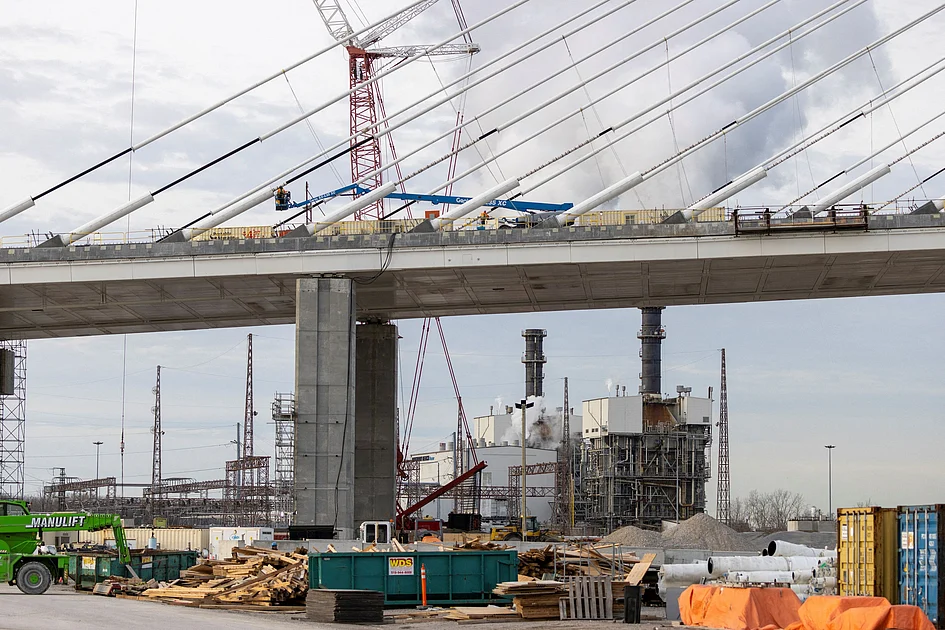
In a significant escalation of cross-border tensions, President Donald Trump has threatened to block the operational launch of the newly constructed Gordie Howe International Bridge, demanding immediate compensation negotiations with Canadian authorities. The $4.7 billion infrastructure project, fully financed by Canada after U.S. refusal to contribute, stands completed and awaits imminent opening.
The presidential declaration emerged via social media platforms, where Trump asserted: “I will not allow this bridge to open until the United States is fully compensated for everything we have given them, and Canada treats the United States with the Fairness and Respect that we deserve.” The administration claims entitlement to at least half ownership of the critical border crossing connecting Detroit, Michigan and Windsor, Ontario.
This confrontation represents the latest development in ongoing trade disagreements between the neighboring nations. Trump specifically referenced Canada’s alcoholic beverage import policies, dairy product tariffs, and ongoing trade negotiations with China as contributing factors to the diplomatic standoff.
The Gordie Howe Bridge project originated in 2012 when Michigan’s then-Governor Rick Snyder utilized executive authority to accept Canadian funding, bypassing legislative approval. Construction commenced in 2018, with the structure now poised to significantly enhance border transit efficiency. According to U.S. Department of Homeland Security assessments, the bridge would annually save travelers $12.7 million through reduced congestion and improved traffic flow.
Michigan’s Democratic leadership has vigorously opposed the presidential threat. Governor Gretchen Whitmer’s spokesperson emphasized that “Canada financed the construction of the bridge – which was built by union construction workers from both sides of the border” and confirmed the project “will open one way or another.” Legislative representatives warned that blocking the bridge would jeopardize regional economic stability, increase business costs, and undermine supply chain security.
The economic implications are substantial. Detroit functioned as the second-largest U.S. freight port by value in 2023, processing $126 billion in commercial truck trade. University of Windsor research indicates the new bridge would reduce crossing times by twenty minutes and generate $2.3 billion in trucker savings over three decades.
This confrontation occurs amidst broader trade policy shifts, including Trump’s recent threat to impose 100% tariffs on Canadian goods should Ottawa proceed with Chinese trade agreements. The administration has additionally threatened aircraft import tariffs targeting Canadian manufacturer Bombardier while demanding certification favors for U.S.-based Gulfstream aircraft.