Bangladesh stands at a critical democratic crossroads as the nation prepares for its most consequential election on Thursday, marking the culmination of an 18-month transitional period. This electoral process follows the youth-led uprising that toppled former Prime Minister Sheikh Hasina’s 15-year administration, subsequently establishing an interim government headed by Nobel laureate Muhammad Yunus.
The voting coincides with a constitutional referendum addressing comprehensive political reforms, collectively representing a fundamental examination of democratic resilience in this South Asian nation. While many citizens anticipate that restored elections will reestablish legal order, safeguard civil liberties, and institute accountable governance, significant apprehensions persist regarding potential political instability, religious minority marginalization, and the escalating influence of Islamist factions within historically secular Bangladesh.
Central to voter demands remains the insistence on impartial elections and robust legal frameworks. Yunus’s commitment to conducting equitable voting procedures addresses widespread skepticism toward previous electoral processes under Hasina’s regime, which many perceived as systematically manipulated. These grievances, compounded by severe suppression of opposition voices, ultimately catalyzed the student-led revolution that forced Hasina into Indian exile.
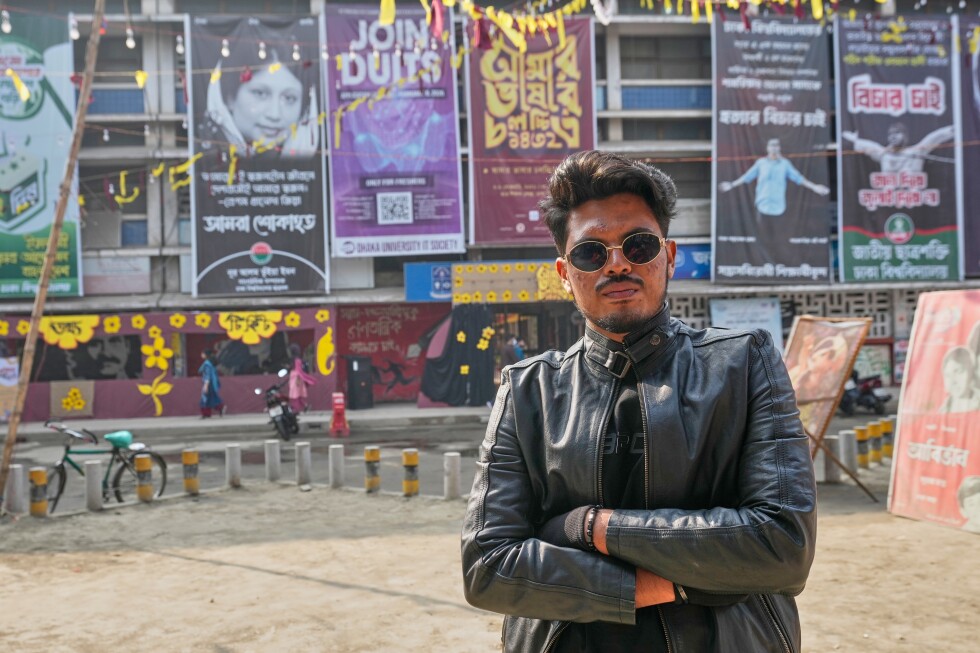
Arefin Labib, referencing the 2024 uprising that witnessed lethal security force crackdowns resulting in hundreds casualties, articulated a widespread sentiment: “I don’t want any more bad incidents in Bangladesh.” Like numerous compatriots, Labib envisions that democratically elected leadership could stabilize the nation and steer it toward prosperity.
This aspiration resonates particularly amid deteriorating conditions following Hasina’s ouster, characterized by escalating political violence, targeted attacks against Hindu minorities, and pervasive breakdowns in public order. Sixty-two-year-old street vendor Zainul Abedeen echoed concerns shared across socioeconomic strata: “I want the government to prevent riots, killings, and any other trouble.”
Although acknowledging the interim government’s success in stabilizing Bangladesh’s free-falling economy, critics highlight its failure to ensure security, protect human rights, and safeguard religious minorities. Dhaka resident Rajit Hasan observed that despite genuine efforts, the profoundly fragmented political landscape prevented meaningful reform implementation.
Hasan emphasized the necessity for strengthened judicial accessibility, authentic civil liberty protections, religious freedom, and accountable leadership embedded within independent institutions. “We want democracy. We want our rights. We want the rule of law,” he asserted, capturing the collective yearning for political cultures that respect rather than suppress dissent.
Simultaneously, women express deepening concerns regarding political representation. Despite Bangladesh’s distinguished history of female leadership under Khaleda Zia and Sheikh Hasina, current electoral dynamics threaten this legacy. With Hasina’s party disqualified from participation and reduced female candidacy despite women’s instrumental role in the revolution, gender inclusivity appears increasingly compromised.
Economics student Wasima Binte Hussain, who participated in the uprising, expressed disappointment that anticipated opportunities for female leadership and gender-focused policymaking failed to materialize during the transition. Her experience reflects broader frustrations regarding the persistent scarcity of women in decision-making roles.
Compounding these anxieties, the resurgence of Jamaat-e-Islami—an Islamist group banned under Hasina but regaining influence since her departure—has intensified fears among women and religious minorities. The party’s advocacy for restricting women’s activities based on traditional gender roles has alarmed many, despite its assurances of moderate governance if elected.
For 22-year-old Sayma Nowshin Suha, the prospect of Islamist ascendancy represents profound trepidation. “In Bangladesh, conservatism is the scariest thing,” she confessed, envisioning a nation where citizens may pursue self-determined lives without fear or constraint.