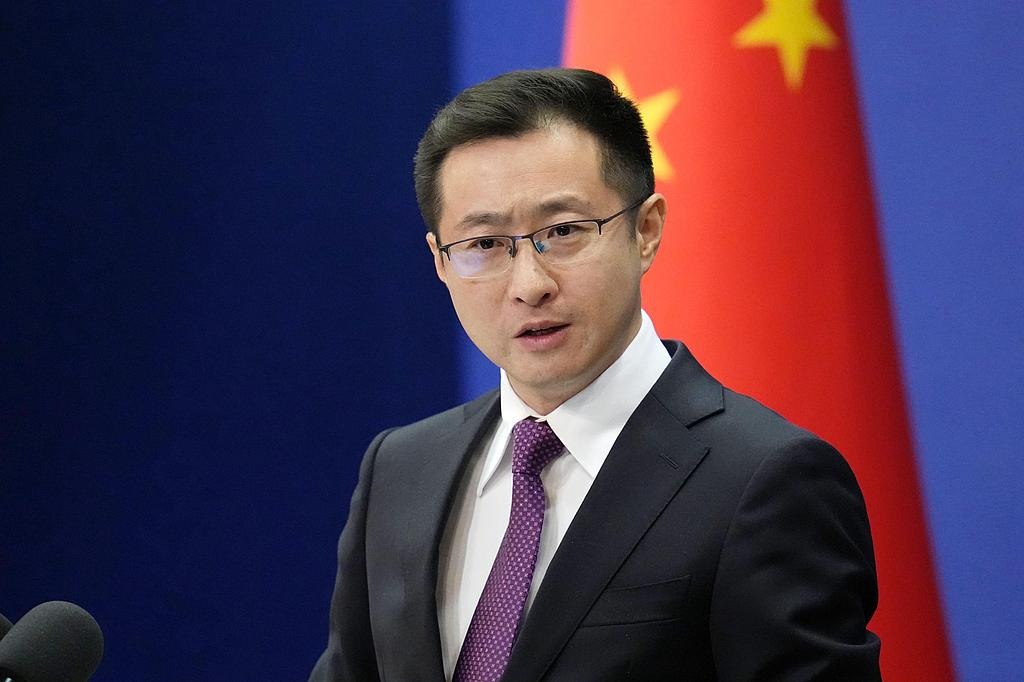
China has called upon Japan to maintain its commitment to peaceful development following a decisive electoral victory by the nation’s ruling coalition. Foreign Ministry spokesman Lin Jian emphasized the necessity for Japan to honor the four foundational political documents that underpin Sino-Japanese relations during a press briefing on Monday.
The statement came in response to Japan’s parliamentary elections, where the ruling Liberal Democratic Party and its coalition partner secured a supermajority of 352 seats in the lower house. This outcome grants the coalition the crucial two-thirds majority required to initiate constitutional amendments—a development that has raised international concerns about Japan’s political direction.
Lin articulated that while the election represents Japan’s internal affair, it reveals ‘profound issues and trends warranting serious reflection.’ He explicitly urged Japanese authorities to ‘address, rather than disregard, international apprehensions’ and to ‘follow the path of peaceful development instead of reverting to militarism.’
Academic experts warn that the electoral results could accelerate Japan’s rightward political shift. Professor Hiroshi Shiratori of Hosei University noted that the coalition’s strengthened position might facilitate revisions to Japan’s security framework, potentially enabling more assertive military posturing and overseas operations. Of particular concern is the possible amendment of Article 9—the constitutional provision that renounces war and prohibits maintaining offensive military capabilities.
Professor Jin Yongming of Ocean University of China cautioned that Prime Minister Sanae Takaichi’s administration might pursue significant policy changes, including revising security documents, relaxing arms export restrictions, and expanding military capabilities. These moves would represent a substantial departure from Japan’s postwar pacifist trajectory.
The Chinese government maintains that its Japan policy remains consistent and unaffected by individual elections. However, Lin reiterated calls for Japan to retract previous statements suggesting potential military involvement in the Taiwan Strait and to demonstrate genuine commitment to bilateral relations through concrete actions.
Economic implications also loom large, as heightened Sino-Japanese tensions could adversely affect trade relations, potentially undermining Japan’s manufacturing sector and broader economic growth while impeding regional cooperation efforts.