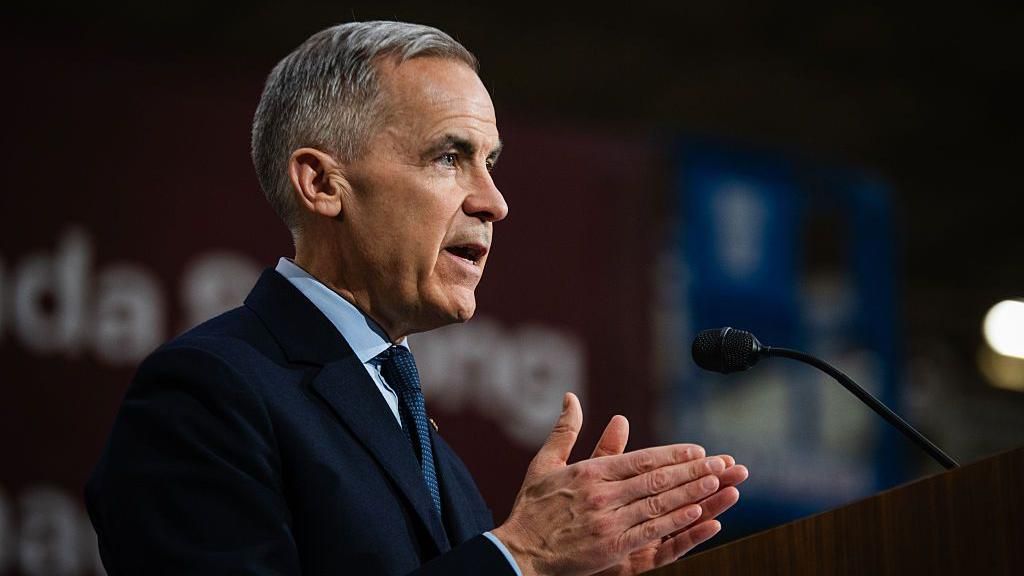
In a significant move to fortify its automotive sector against mounting economic pressures, Canadian Prime Minister Mark Carney has introduced a comprehensive strategy aimed at bolstering domestic car manufacturing while accelerating the nation’s transition to electric vehicles. The announcement was made on Thursday at the Martinrea auto parts manufacturing facility in Woodbridge, Ontario, against the backdrop of challenging trade relations with the United States.
The newly unveiled measures represent Canada’s proactive response to the 25% tariff imposed by the Trump administration last year on Canadian vehicles and auto parts—a decision that has severely disrupted an industry where approximately 90% of production is traditionally exported to the US market. This tariff implementation has already resulted in thousands of job losses across Canadian auto plants as major manufacturers including General Motors and Stellantis have scaled back their Canadian operations.
Carney’s multifaceted approach includes financial incentives designed to encourage automakers to maintain and expand their Canadian manufacturing footprint. A key component is a novel tariff offset scheme that provides credits to companies like General Motors and Toyota to help mitigate the impact of US import duties. Additionally, the government will reintroduce consumer rebates for electric vehicle purchases—a direct contrast to the US where similar subsidies were eliminated under the Trump administration.
The Prime Minister simultaneously announced stricter emissions standards for new vehicles, establishing an ambitious target for electric vehicles to comprise 90% of all car sales by 2040. In a notable policy shift, Carney eliminated the previous administration’s electric vehicle sales mandate, arguing that the new emissions-focused approach would achieve environmental goals without placing excessive burdens on automakers.
This strategic realignment occurs as the United States-Canada-Mexico Agreement (USMCA) faces its scheduled review this year. Carney noted that the original purpose of eliminating tariffs across North America no longer aligns with current US trade objectives, necessitating Canadian preparedness for ‘all possibilities.’
Concurrently, Canadian officials have been actively diversifying international partnerships to reduce dependence on US markets. Recent weeks have seen Canada establish agreements with both China and South Korea that could potentially undermine US automotive interests. The arrangement with China involves eased tariffs on Chinese electric vehicles, while the South Korea agreement aims to encourage Korean automotive manufacturing within Canada.
While automotive industry representatives have generally welcomed the pragmatic approach, environmental groups have expressed concerns about the elimination of the mandatory EV sales targets, arguing that weakened regulations might slow Canada’s progress toward its climate objectives.