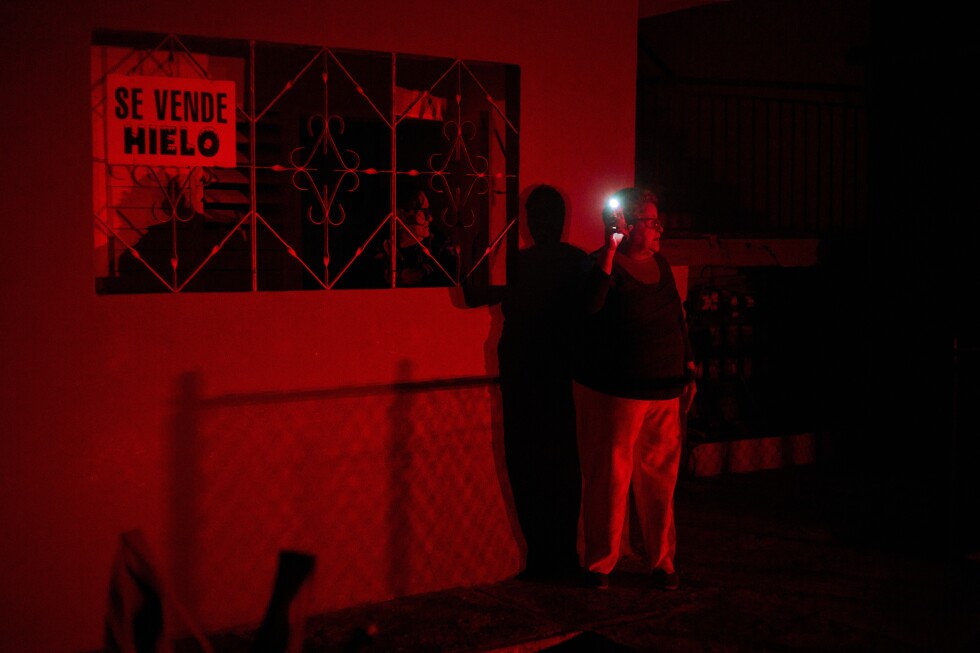
SANTA CRUZ DEL NORTE, Cuba — In this coastal community where sulfur scents the air from petroleum production and one of Cuba’s largest thermoelectric plants operates, residents exist in paradoxical darkness. Despite reactivated energy infrastructure, the people of Santa Cruz del Norte face escalating hardships as geopolitical tensions between Washington and Havana trigger severe fuel shortages.
The town east of Havana has become emblematic of Cuba’s deepening crisis, where daily blackouts force residents to revert to primitive cooking methods. Kenia Montoya, a 50-year-old mother, recently dismantled her bathroom door for firewood to feed her children. ‘Things are getting worse for us now,’ she lamented, gesturing toward the faded purple sheet currently serving as her bathroom door.
This deterioration follows U.S. President Donald Trump’s threat to impose tariffs on nations supplying oil to Cuba, effectively strangling the island’s energy imports. ‘Well, it’s a failed nation now,’ Trump declared this week. ‘They’re not getting any money from Venezuela, and they’re not getting any money from anywhere.’
The Cuban government remains silent regarding oil reserves, offering no clarity on potential Russian assistance following disrupted Venezuelan shipments after U.S. actions against Venezuela’s leadership in January. While Mexican humanitarian aid including food has been pledged, residents fear worsening conditions.
Gladys Delgado, 67, survives on a $6 monthly pension while sewing colorful rugs from clothing scraps for supplemental income. ‘With all those tariffs they’re going to impose on countries, no oil will come in, and how are we going to live?’ she questioned.
The human impact manifests in countless small tragedies: diabetic Minorkys Hoyos cooking cassava in darkness, her rechargeable lights broken; children playing with dominoes on dusty sidewalks; families celebrating birthdays early to avoid evening blackouts.
Despite the town’s mural proclaiming ‘NO ONE GIVES UP HERE. LONG LIVE A FREE CUBA,’ residents increasingly wonder about their endurance capacity. The crisis combines severe blackouts, soaring prices, and critical shortages of basic goods, creating what local Iván Amores describes as ‘truly torture’ compared to former prosperity.
As temperatures dropped to record lows in late January, the resourcefulness Cubans are renowned for—improvised lanterns using baby food jars, handmade tube lights with USB ports—becomes essential yet increasingly inaccessible for pensioners like Mariela Viel, who receives $8 monthly after 40 years of service.
Through the darkness, moments of resilience persist. Birthday celebrations continue under yellow moons, with music blasting from scooter speakers as 61-year-old Olga Lilia Laurenti philosophizes: ‘You’re not going to waste part of your life on something that’s out of your control… You need laughter, you need joy.’