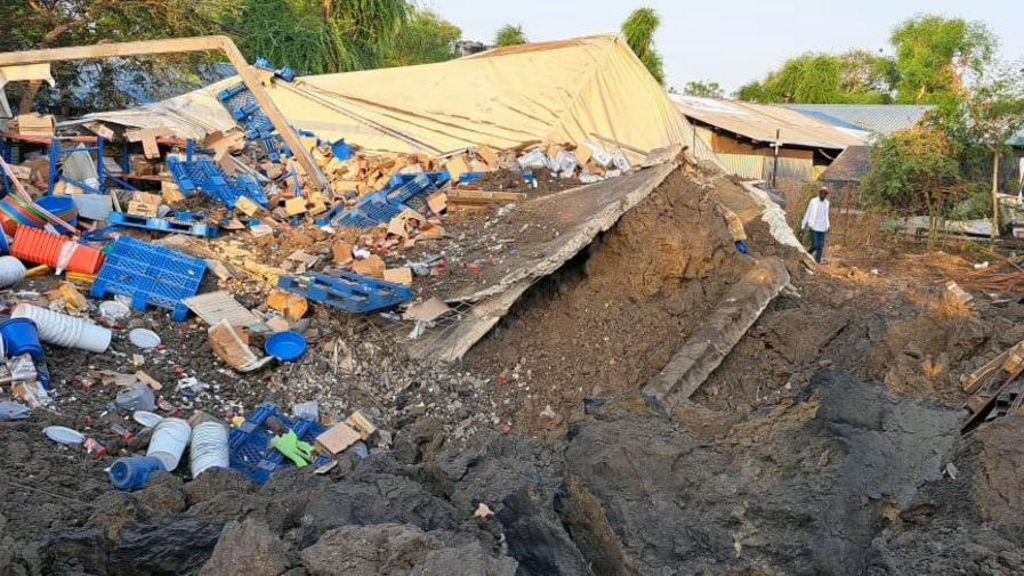
Medical charity Doctors Without Borders (MSF) reports that a government airstrike has destroyed its hospital in South Sudan’s Jonglei state near the Ethiopian border, leaving an unknown number of aid workers missing and raising fears of renewed civil conflict.
The attack occurred Tuesday night in the Lankien area, where MSF facilities served approximately 250,000 people. Although the hospital had been evacuated following warnings of an imminent strike, one staff member was injured and the facility’s main warehouse containing critical medical supplies was completely destroyed.
In a simultaneous assault, MSF’s health facility in Pieri was looted by unidentified attackers, rendering it unusable for local communities. Medical personnel were forced to flee with surrounding communities, and their current whereabouts remain unknown.
This violence emerges amid escalating tensions between government forces loyal to President Salva Kiir and opposition factions supporting suspended First Vice-President Riek Machar, who faces charges of plotting to overthrow the government. The resurgence of fighting threatens to reignite a full-blown civil war in the world’s youngest nation.
The United Nations estimates approximately 280,000 people have been displaced by fighting and aerial bombardments in Jonglei since December. The region already suffers from severe food insecurity and critical healthcare shortages, compounded by government restrictions on humanitarian access in opposition-held territories.
MSF operations manager Gul Badshah condemned the attacks, stating, ‘While we are aware of the enormous needs in the country, we find it unacceptable to be a target for attacks.’ The organization experienced eight targeted attacks in South Sudan during the previous year, resulting in the closure of two hospitals and suspension of general healthcare activities across multiple states.
The current conflict traces back to 2013, when fighting first erupted between forces supporting Kiir and Machar. Although a 2018 peace agreement formally ended a civil war that claimed nearly 400,000 lives, implementation has been inconsistent amid ongoing ethnic tensions and sporadic violence.