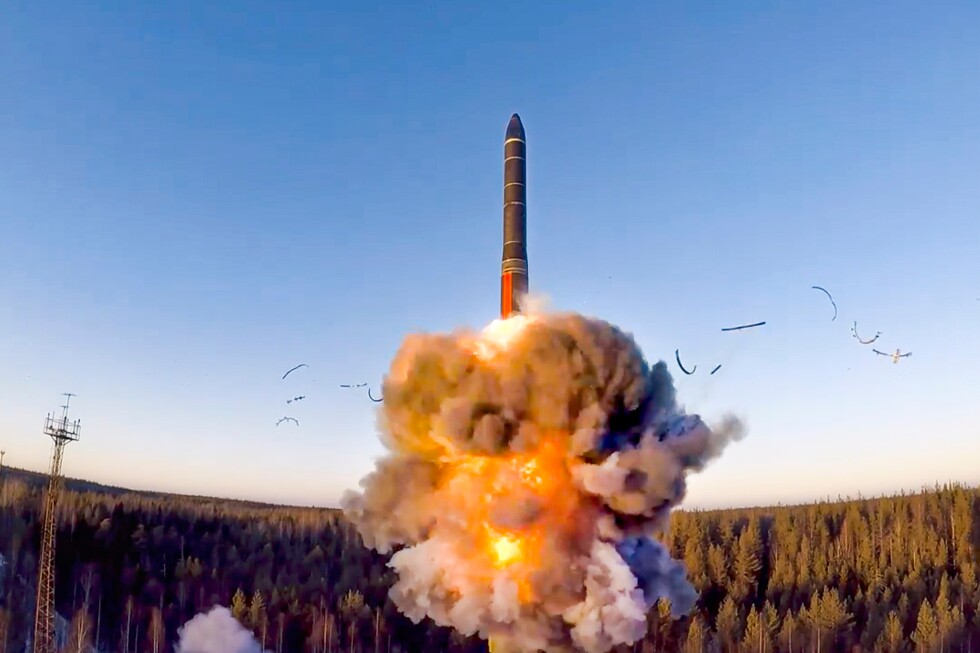
MOSCOW — The New START Treaty, the final remaining nuclear arms control agreement between Russia and the United States, officially expired on Thursday, marking the first time in over half a century that the world’s two largest atomic arsenals operate without mutual limitations.
The termination of this pivotal arms control framework has raised global concerns about the potential emergence of an unconstrained nuclear arms race. The treaty, originally signed in 2010 by former President Barack Obama and Russian leader Dmitry Medvedev, had established strict caps of 1,550 deployed nuclear warheads and 700 delivery systems for each nation.
Russian President Vladimir Putin had previously expressed willingness to extend the treaty’s limitations for an additional year, contingent on reciprocal action from Washington. However, the Trump administration remained noncommittal regarding extension negotiations. Kremlin adviser Yuri Ushakov confirmed that Putin discussed the treaty’s expiration with Chinese President Xi Jinping on Wednesday, noting the absence of formal response from American officials to Moscow’s extension proposal.
The Russian Foreign Ministry issued a definitive statement Wednesday night clarifying that “under the current circumstances, we assume that the parties to the New START Treaty are no longer bound by any obligations or symmetrical declarations within the context of the Treaty, including its core provisions.”
Ushakov emphasized that Russia “will act in a balanced and responsible manner based on thorough analysis of the security situation,” suggesting measured rather than immediate escalation in nuclear arsenal expansion.
The treaty’s verification mechanism, which included comprehensive on-site inspections, had been suspended since 2020 due to COVID-19 restrictions and never resumed. In February 2023, Putin formally suspended Moscow’s participation, citing incompatible security conditions amid NATO’s declared objectives in Ukraine, while simultaneously maintaining commitment to the pact’s nuclear caps.
This development represents the culmination of a progressive dismantling of Cold War-era nuclear arms control architecture, with New START being the last in a series of bilateral agreements that have now全部 expired.