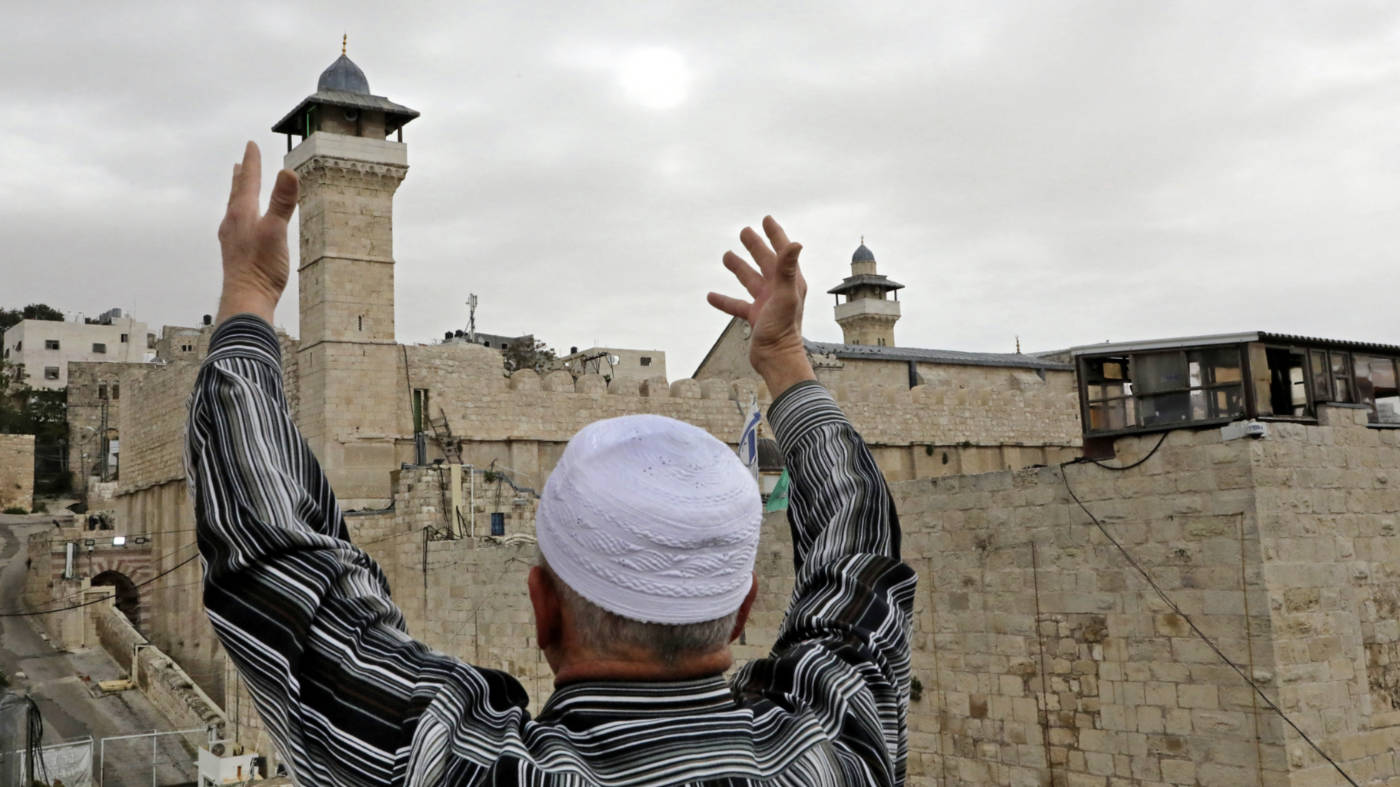
The Ibrahimi Mosque in Hebron, a revered holy site for Islam, Judaism, and Christianity, has become the epicenter of escalating tensions in the occupied West Bank. This medieval structure, built above ancient tombs believed to hold biblical patriarch Abraham and his family, has been administered by Palestinians as a mosque for over 1,400 years. Recent Israeli actions, however, have fundamentally altered the status quo at one of the region’s most contested religious sites.
In January, Israeli authorities barred the mosque’s Palestinian directors and seized planning rights over portions of the complex, violating longstanding arrangements that had governed the site for decades. This move represents the latest in a series of access restrictions and settler attacks against Palestinian holy sites that have intensified since October 2023, affecting including Al-Aqsa Mosque in Jerusalem and Joseph’s Tomb in Nablus.
The historical significance of the Ibrahimi Mosque (known to Jews as the Cave of the Patriarchs and to Christians as the Cave of Machpelah) spans millennia. The current structure incorporates a 12th-century Romanesque Christian church constructed atop an earlier mosque destroyed during the Crusades. After conversion back to a mosque by the Muslim Ayubbid dynasty, the site remained exclusively accessible to Muslims throughout Mamluk and Ottoman rule until the British Mandate period.
Modern tensions escalated significantly after Israel’s occupation of the West Bank in 1967. The establishment of the Kiryat Arba settlement on confiscated Palestinian land brought thousands of settlers to Hebron’s outskirts, creating a segregated enclave adjacent to 200,000 Palestinians. The conflict reached a horrific climax in 1994 when American-Israeli settler Baruch Goldstein massacred 29 Palestinian worshippers during Ramadan prayers. This tragedy led to the formal partition of the prayer hall, with two-thirds reserved for Jewish worship and one-third for Muslims.
The current situation reflects intensified Israeli control measures. The Civil Administration, Israel’s governing body in the West Bank, unilaterally seized municipal control of the mosque’s central courtyard in December, enabling construction projects opposed by Palestinian authorities. Israeli settlers have increasingly stormed the mosque, hosting weddings and music festivals in violation of prayer arrangements, while far-right ministers Bezalel Smotrich and Itamar Ben Gvir (a Kiryat Arba resident) have made provocative visits with large security details.
The Palestinian Authority has condemned these actions as part of Israel’s ‘Judaization projects’ in the West Bank, stating they constitute ‘flagrant violations of international resolutions and law.’ Hamas similarly criticized the moves as undermining the mosque’s Islamic identity. While Qatar, Turkey, and the UAE have issued diplomatic condemnations, the international community has taken limited concrete action.
Palestinian lawyers are now petitioning Israel’s Supreme Court, citing UNESCO’s 2017 designation of the site as an endangered World Heritage Site belonging to Palestine. They argue that Israeli decisions regarding the mosque were made ‘without authority’ and represent ‘systematic and unlawful violation of the status quo.’ As legal battles continue, the Ibrahimi Mosque remains both a sacred space and a symbol of the broader Israeli-Palestinian conflict.