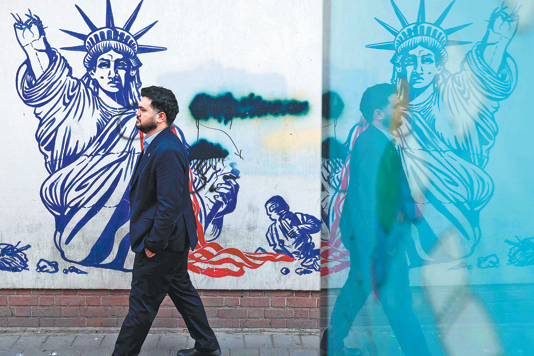
The prospect of US-Iran negotiations remains clouded by escalating military threats and diplomatic uncertainty. Recent developments indicate that while diplomatic channels remain theoretically open, the environment for productive dialogue has deteriorated significantly due to heightened military posturing.
According to reports from news website Axios, US President Donald Trump’s special envoy Steve Witkoff and Iranian Foreign Minister Seyyed Abbas Araghchi were planning to meet in Istanbul on Friday to discuss potential nuclear agreements. However, Iranian media outlets including Tasnim News Agency quickly challenged these reports, characterizing any potential talks as being in their preliminary stages without finalized details or framework.
The diplomatic uncertainty coincides with increased US military activity in the region. The Pentagon deployed an aircraft carrier strike group and multiple warships to the Middle East in late January, while Israel announced joint naval exercises with US forces in the Red Sea. President Trump himself hinted at potential military action if Iran refuses to negotiate terms regarding its nuclear program.
Regional security experts warn that the current situation creates substantial risks for broader conflict. Professor Sun Degang, Director of the Center for Middle Eastern Studies at Fudan University, notes that the US appears fully prepared for potential military action against Iran. Such action could involve precision strikes on high-value targets, followed by systematic degradation of Iran’s missile capabilities, drone production facilities, and air defense systems.
Iran maintains multiple response options, including targeting US naval assets in the Gulf, striking US military bases throughout the region, or disrupting maritime traffic through the strategically critical Strait of Hormuz. Such actions could severely impact global energy supplies and destabilize markets.
Academic analysts suggest that Washington’s approach reflects a strategy of “maximum pressure” and brinkmanship designed to force Tehran back to negotiations. However, this approach carries significant risks for regional stability and international law. Military action against Iran would represent a serious breach of the post-World War II global governance framework centered on the United Nations, potentially eroding the authority of international institutions and creating a more power-driven international order.
The current tensions highlight the complex interplay between diplomatic efforts and military posturing in one of the world’s most volatile regions, with potential consequences for global security architecture and economic stability.