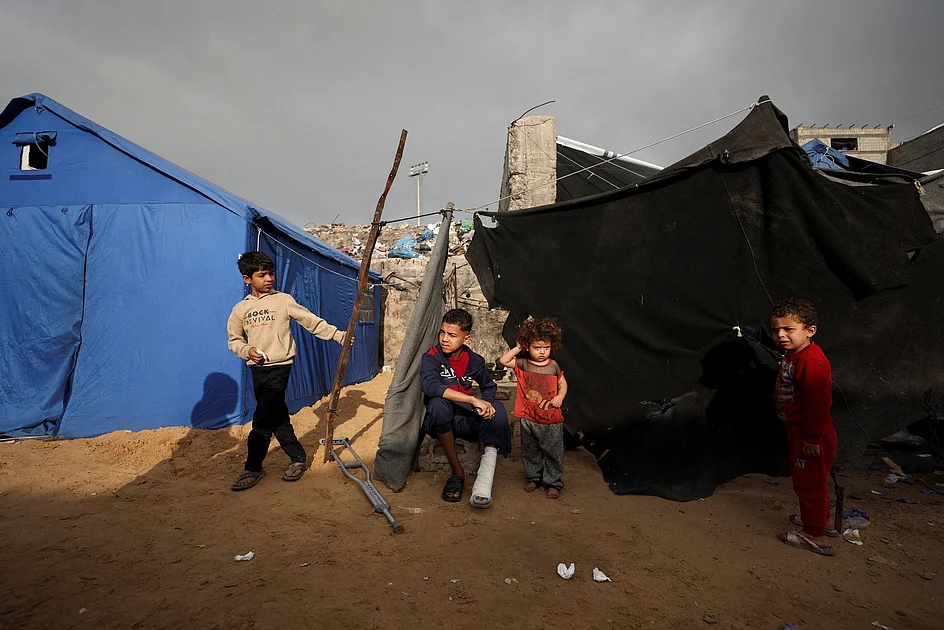
DUBAI – Amidst high-level discussions on governance and innovation at the World Governments Summit, a stark warning emerged from global aid leaders about the escalating hunger crisis affecting hundreds of millions worldwide. UNICEF Executive Director Catherine Russell and World Food Programme Assistant Executive Director Rania Dagash-Kamara delivered sobering accounts of a humanitarian emergency reaching catastrophic proportions.
The statistics paint a grim picture: approximately 300 million people globally face acute food insecurity, uncertain whether they will receive their next meal. This number represents what aid officials describe as the most severe category of hunger, where survival becomes a daily uncertainty.
Russell emphasized the human tragedy behind the numbers, noting that 14 million children faced severe malnutrition risks last year – equivalent to nearly half a million classrooms of 30 children each. During hospital visits in conflict zones like Afghanistan and Yemen, she witnessed malnourished infants sharing beds, their bodies too weakened to even cry. “At that stage, children are not resting,” Russell stated. “They are simply trying to survive.”
Dagash-Kamara provided harrowing field accounts, including a Somali mother who walked four days to reach a food distribution center after burying two children during her journey. “This is the level of desperation we are facing,” she told summit attendees.
The crisis is compounded by the deadly synergy between malnutrition and disease. As Dagash-Kamara explained, “People don’t usually die from hunger alone. They die from the illnesses that come with it” – a consequence of malnutrition weakening immune systems.
Despite proven solutions like ready-to-use therapeutic food (RUTF) that can save severely malnourished children, aid organizations face critical funding shortages amid growing needs. Russell noted the paradox: “We know how to save lives. What we don’t always have is sufficient funding or access.”
Both leaders highlighted school feeding programs as particularly effective interventions, describing them as long-term investments in children’s futures. Dagash-Kamara shared the story of a Syrian girl who saved half her school sandwich for her mother, illustrating how such programs provide both nutrition and dignity.
The officials called for innovative partnerships with private sector entities and digital creators to amplify reach and engagement. With people spending over five hours daily on mobile devices, Russell emphasized that content creators “know how to reach people where they are and make them stop and care.”
As Ramadan approaches, Dagash-Kamara highlighted initiatives like the “ShareTheMeal” app, which provides meals for just 80 cents, encouraging families to involve children in charitable giving.
Russell concluded with a powerful appeal from the global platform: “Every child deserves what we want for our own children: health, education, and a future. These challenges are not insurmountable. They require collective responsibility.”