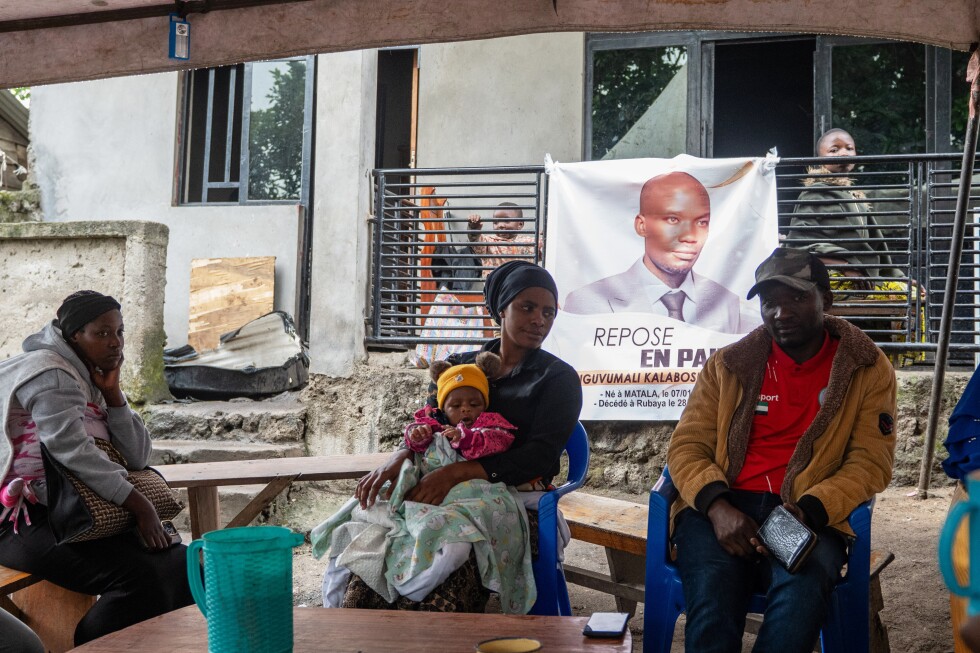
GOMA, Democratic Republic of Congo — Eastern Congo confronts a devastating tragedy as communities mourn the loss of at least 200 artisanal miners killed in a catastrophic landslide at the rebel-controlled Rubaya coltan mining complex. The disaster struck last Wednesday following torrential rains, collapsing a network of hand-dug tunnels and trapping an unknown number of workers who remain missing.
The mining site, located approximately 40 kilometers west of Goma, has been under the control of Rwandan-backed M23 rebels since early 2024. It employs thousands of miners who extract valuable minerals using rudimentary tools and techniques passed down through generations.
In Goma’s Mugunga neighborhood, the family of 39-year-old Bosco Nguvumali Kalabosh gathered in mourning. His photograph displayed against a wall served as the centerpiece for grieving relatives and neighbors. “He was supposed to return to Goma on Thursday,” lamented his older brother, Thimothée Kalabosh Nzanga. Kalabosh, a decade-long veteran of the mines who owned his own pits, leaves behind a widow and four young children.
Despite the overwhelming loss, economic necessity drives survivors back to the hazardous worksite. Tumaini Munguiko, who survived the collapse while losing five friends and his older brother, explained the grim reality: “Seeing our peers die is very painful. But despite the pain, we are forced to return to the mines to survive.” Munguiko described multiple previous disasters as “almost normal” in their frequency.
Geological instability during rainy seasons creates perpetual danger in Rubaya. Miners excavate extensive parallel tunnels with inadequate structural support and no safe evacuation routes. According to former miner Clovis Mafare, uncontrolled digging without safety measures means “in a single pit, there can be as many as 500 miners, and because the tunnels run parallel, one collapse can affect many pits at once.”
The absence of insurance or compensation compounds the tragedy. Mafare noted that while families might receive minimal funeral assistance, “that small amount isn’t compensation.” Kalabosh’s family has received no financial support for their loss.
Rubaya’s coltan mines have become strategic assets in Congo’s ongoing conflict, frequently changing hands between government forces and rebel groups. The extracted columbite-tantalite ore produces tantalum and niobium—both classified as critical raw materials by major global economies. These minerals power modern technology from mobile phones and computers to missile systems and jet engines.
The region’s isolation exacerbates the crisis. Rubaya has been virtually disconnected for two weeks with no mobile network or internet. Residents must pay approximately $2 for 30 minutes of connectivity through private Starlink systems. Poor infrastructure and persistent conflict maintain unreliable cellular and electrical services.
Political recriminations have followed the tragedy. Congo’s government issued a statement on X expressing solidarity with victims while accusing rebels of illegally and unsafely exploiting natural resources and blaming Rwanda. An M23 spokesperson countered by accusing the government of politicizing the disaster and citing previous collapses at government-controlled mines.