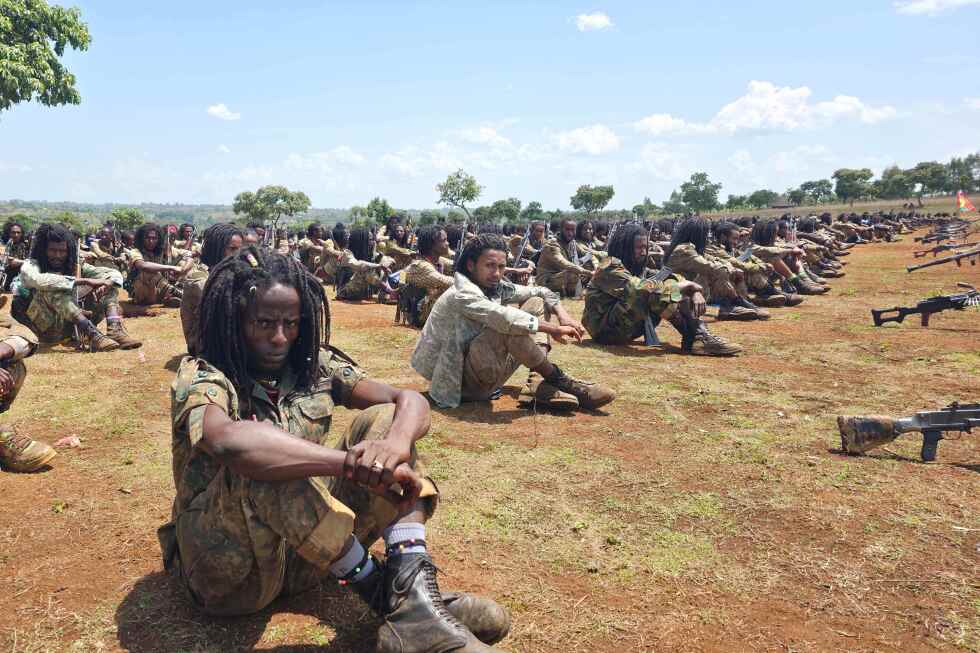
Deep within the forested terrain of Ethiopia’s Oromia region, rebel commander Jaal Marroo maintains a nomadic existence, evading government drones while leading the Oromo Liberation Army (OLA). Designated as a terrorist organization by Ethiopian authorities, the OLA has waged an insurgency since 2018, with both sides accused of committing severe human rights violations against civilians.
Marroo, in a rare interview from an undisclosed location, refuted government allegations that his fighters target civilians. “Our war is not against the people,” he told The Associated Press. “It is against the brutal regime that has occupied and oppressed the nation for generations. We are fighting to correct a system that treats the Oromo as subjects, rather than citizens.”
The conflict has created a humanitarian crisis largely obscured from international view due to government restrictions on journalists and rights groups. United Nations investigators and human rights organizations document atrocities committed by both parties, including summary executions, torture, abductions, and sexual violence.
Amnesty International’s regional spokesperson Sarah Kimani stated: “Our research puts both the OLA and government forces in the middle of the conflict in terms of summary executions, torture, abductions, and rape of women.” The organization plans to publish a comprehensive report on human rights abuses in March.
Civilians recount harrowing experiences of being targeted by both sides. Ayantu Bulcha, an opposition party member, described how soldiers killed her cousin, father, and uncle in early December after accusing them of supporting rebels. “I can’t even go there to grieve with her,” Bulcha said of her mother. “I am afraid for my own safety.”
The violence has crippled essential services, with the UN reporting 3.2 million children out of school due to fighting. Humanitarian aid distribution remains severely constrained, contributing to widespread malnutrition. Medical facilities have not been spared—the International Committee of the Red Cross reported in 2023 that nearly all 42 health posts in Oromia’s Begi district had been looted or damaged.
Although recent government offensives have degraded OLA capabilities, including convincing a key commander to defect, the region remains highly unstable. Beyond the insurgency, criminal enterprises engage in extortion, kidnapping, and robberies, creating a complex security landscape where civilians suffer regardless of affiliation.
Prime Minister Abiy Ahmed’s Oromo heritage has not resolved longstanding grievances among Ethiopia’s largest ethnic group, who say they remain marginalized in the federal power structure. With movement severely restricted and violence pervasive, residents describe Oromia as fundamentally insecure, caught between multiple armed factions with civilians paying the ultimate price.