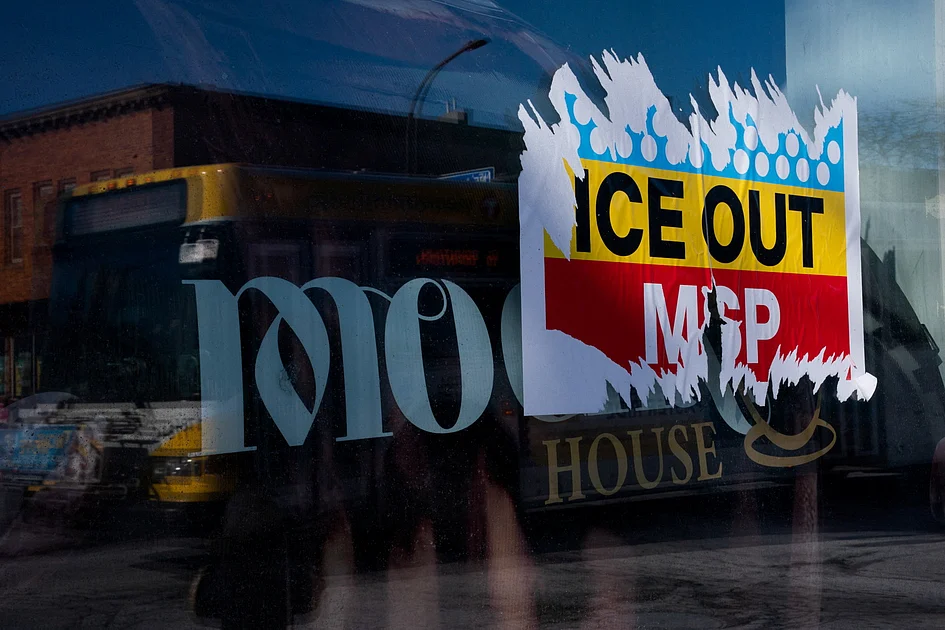
A Minnesota federal court has declined to intervene in President Donald Trump’s controversial immigration enforcement operation in Minneapolis-St. Paul, allowing the contentious program to continue despite allegations of systemic civil rights violations. U.S. District Judge Kate Menendez, appointed by former President Biden, issued the ruling on Saturday, rejecting the Minnesota Attorney General’s request to halt or restrict the Department of Homeland Security initiative that has deployed thousands of federal agents to the region.
The judicial decision comes amid escalating tensions in the Twin Cities area, where the operation has sparked sustained protests and resulted in the fatal shootings of two American citizens by federal personnel. The lawsuit filed by Minnesota officials accused immigration agents of engaging in racial profiling, implementing unlawful detainment practices, and employing excessively aggressive tactics that have created widespread fear within communities.
Judge Menendez justified her ruling by referencing a recent federal appeals court decision that stayed a more limited injunction against Immigration and Customs Enforcement operations in Minnesota. “If that injunction went too far, then the one at issue here—halting the entire operation—certainly would,” she stated in her written opinion.
The political dimension of the conflict became increasingly apparent as Minnesota Attorney General Keith Ellison, an elected Democrat, accused the Trump administration of targeting the state due to its Democratic political orientation. Meanwhile, administration officials defended the operation as necessary for enforcing federal immigration laws in accordance with presidential policies.
The situation intensified significantly following two high-profile incidents: the January 7 shooting of Renee Good, who was killed in her car by an immigration agent, and the January 24 fatal shooting of Alex Pretti by a Border Patrol agent. Both incidents were captured on video and circulated widely, contradicting official accounts that the agents acted in self-defense.
In a notable development, President Trump indicated on Saturday that future federal law enforcement deployments would require explicit requests from local authorities. “If they want help, they have to ask for it,” Trump told reporters aboard Air Force One, adding that unsolicited interventions typically result in complaints rather than appreciation.
The ruling represents a temporary victory for the administration’s immigration enforcement approach while legal challenges continue to develop. Ellison acknowledged the setback but emphasized that the legal battle remains in its early stages, with additional avenues for challenge still available.