In a landmark address at Venezuela’s Supreme Court, Acting President Delcy Rodriguez unveiled transformative national reconciliation measures, including a comprehensive amnesty proposal and the planned closure of the notorious El Helicoide prison. The announcement marks the most significant reform initiative since the U.S.-led ouster of authoritarian leader Nicolas Maduro just weeks ago.
Rodriguez detailed legislation that would grant general amnesty covering the entire period of political violence from 1999 to present, encompassing both the Hugo Chavez presidency and Maduro’s subsequent authoritarian rule. “This law will serve to heal the wounds left by political confrontation, fueled by violence and extremism,” Rodriguez declared before assembled government officials, framing the measure as essential for restoring judicial integrity.
The acting president simultaneously announced plans to convert the infamous El Helicoide detention facility—where human rights organizations documented systematic torture of political prisoners—into a multipurpose community center. The massive structure, originally constructed as a shopping mall, will be repurposed as a “sports, cultural and commercial centre for police families and neighboring communities.”
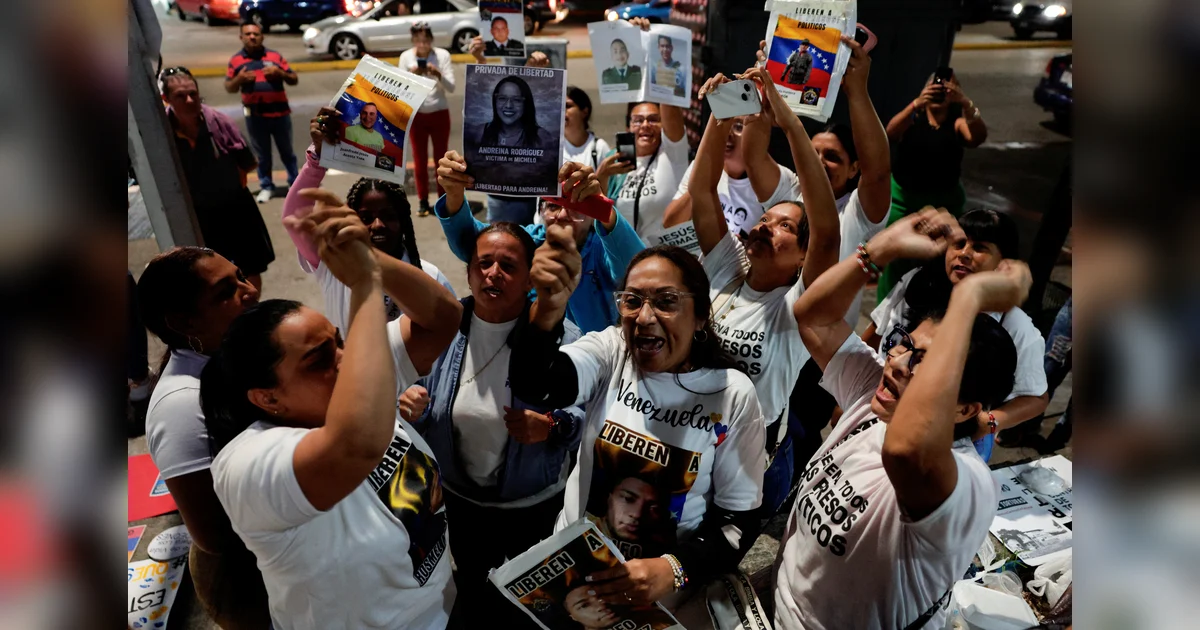
The reforms generated immediate emotional responses from affected families. Betsy Orellana, 63, expressed overwhelming joy at the prospect of her son’s release after six months without communication: “It’s wonderful! This is a huge joy, it’s an amnesty, my God, it’s total liberation.”
These developments follow Rodriguez’s rapid implementation of U.S.-backed reforms since assuming power less than four weeks ago. The government has already passed legislation opening Venezuela’s critical oil sector to private investment—a key Washington demand—prompting the immediate rollback of U.S. sanctions targeting Venezuelan petroleum.
However, opposition figures remain cautiously optimistic. Nobel Peace Prize laureate Maria Corina Machado characterized the amnesty as a response to American pressure rather than voluntary regime action, while opposition lawmaker Tomas Guanipa expressed hope that the measure would terminate “an era of repression” and initiate a genuine democratic transition.
Concurrently, U.S. authorities confirmed the release of all known American prisoners in Venezuela, including Peruvian-American Arturo Gallino Rullier. In further normalization steps, the Trump administration lifted flight bans to Venezuela and prepared to reestablish diplomatic presence in Caracas, with seasoned diplomat Laura Dogu appointed as charge d’affaires.