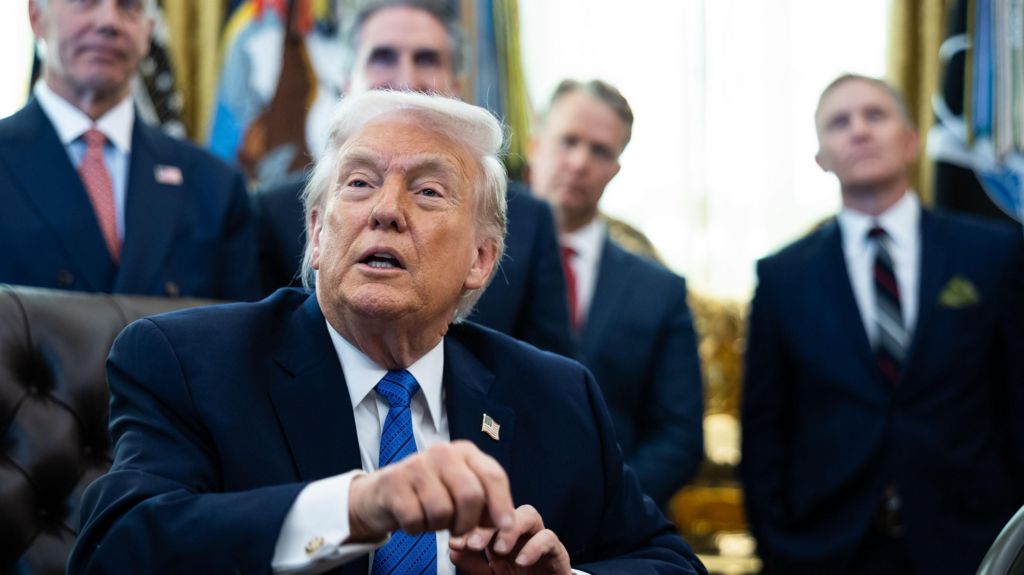
In a tense geopolitical standoff, U.S. President Donald Trump has declared that Iran ultimately desires a negotiated settlement to avoid potential U.S. military action. This assertion, made during a White House press briefing on Friday, directly contradicts Tehran’s firm position that its missile defense systems are “never” to be included in any negotiations.
When questioned about the significant buildup of U.S. naval forces in the Persian Gulf, President Trump stated, “I can say this, they do want to make a deal,” though he provided no specific evidence or details to support this claim. This follows his Wednesday warning to Iranian leadership that time is “running out” to reach a new agreement concerning its nuclear program, a threat underscored by the deployment of a major naval armada to regional waters.
The Iranian government maintains a starkly different public stance. Foreign Minister Abbas Araghchi reiterated that the country’s missile systems are non-negotiable and repeated official assertions that Iran’s nuclear ambitions are purely peaceful. He did, however, leave the door open for talks predicated on “mutual respect” and trust, while noting no current discussions are scheduled with American officials.
Amidst this diplomatic friction, Iran’s top security official, Ali Larijani, met with Russian President Vladimir Putin in Moscow. The Kremlin confirmed the meeting, stating the leaders discussed pressing “Middle Eastern and international issues,” signaling Russia’s continued engagement in the regional power dynamic.
President Trump explicitly outlined two primary conditions for Iran to avoid a military confrontation: complete abandonment of its nuclear weapons ambitions and an immediate cessation of violence against domestic protesters. This comes in the wake of widespread anti-government demonstrations that began in late December, which have been met with a severe crackdown. Independent monitoring groups, including the U.S.-based HRANA, report a confirmed death toll exceeding 6,300, with the Norway-based Iran Human Rights organization warning the final figure could surpass 25,000 casualties.
Refusing to commit to a withdrawal timeline for the U.S. fleet, President Trump remarked with characteristic ambiguity, “We’ll see how it all works out. They have to float someplace, so they might as well float near Iran,” keeping military pressure as a central component of his negotiation strategy.