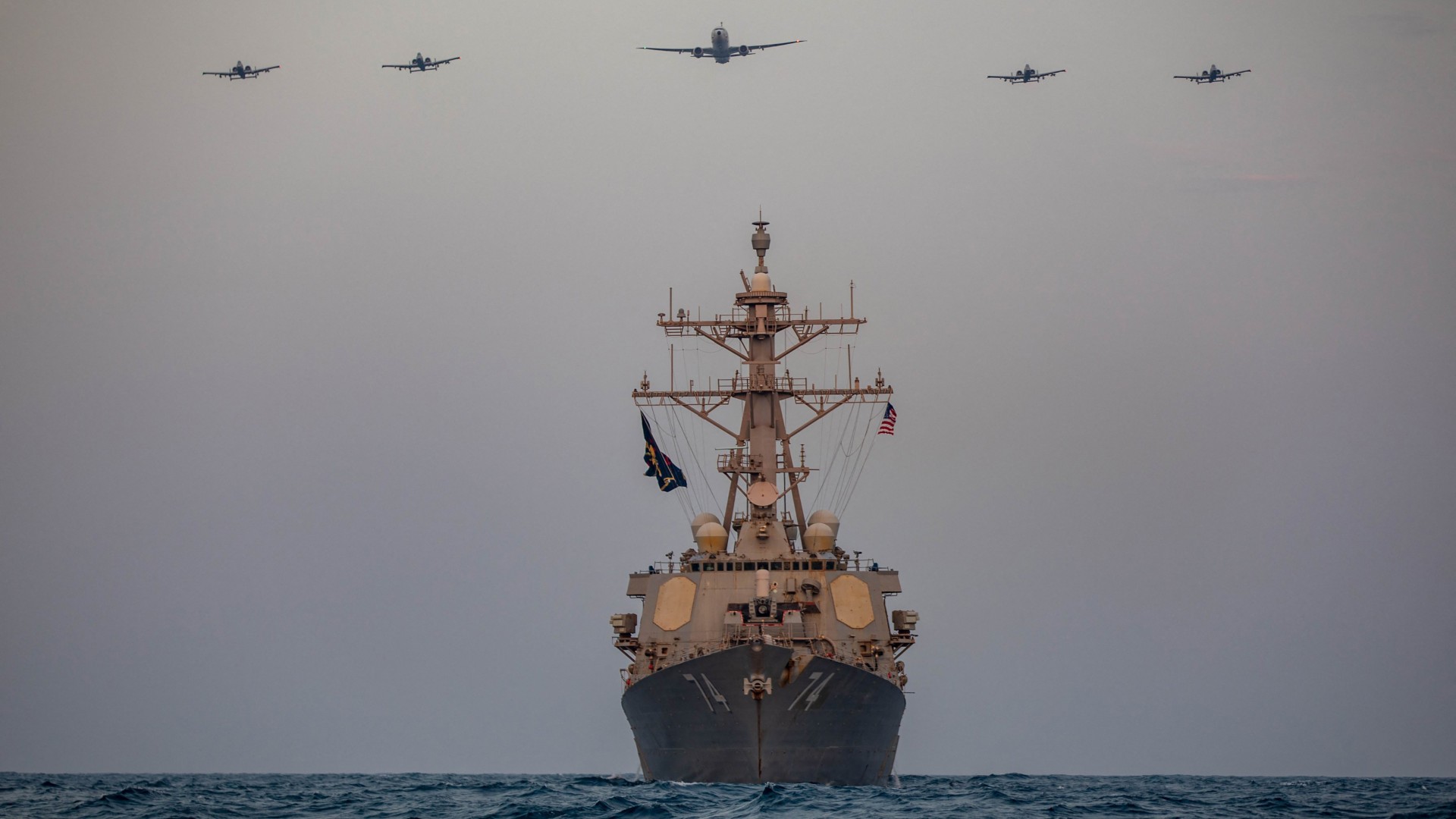
The United States is significantly enhancing its military posture across the Middle East as diplomatic rhetoric intensifies between Washington and Tehran. Recent declarations from the Trump administration regarding a ‘massive armada’ movement toward Iranian waters have catalyzed preparations for potential regional conflict.
According to defense analyses, approximately 40,000 American troops are currently stationed throughout the region, distributed across at least 19 military installations. The strategic al-Udeid Air Base in Qatar serves as the tactical headquarters for US Central Command (Centcom), hosting nearly 10,000 personnel and extensive aerial assets. Bahrain maintains the US Navy’s Fifth Fleet headquarters with 9,000 troops, while Kuwait stations around 13,500 soldiers across multiple facilities including Camp Arifjan and Ali al-Salem Air Base.
The naval reinforcement centerpiece involves the nuclear-powered USS Abraham Lincoln carrier strike group, which has redirected from the South China Sea to the Arabian Sea. This formidable force includes Arleigh Burke-class destroyers equipped with Tomahawk cruise missiles capable of reaching deep into Iranian territory, accompanied by 5,680 crew members and multiple aircraft squadrons.
Electronic warfare capabilities are being augmented with the deployment of RC-135W Rivet Joint surveillance aircraft to Qatar and EA-18G Growler jets transiting toward the region. Additional reinforcements include F-15 fighter squadrons at Jordan’s Muwaffaq Salti Air Base and anticipated THAAD missile defense systems.
Regional allies exhibit cautious positioning, with both the UAE and Saudi Arabia publicly refusing permission for their territories to be used for offensive operations against Iran. Qatar, Oman, and Turkey have similarly advocated against military action, reflecting concerns about potential retaliatory measures. Iranian-aligned groups including Yemen’s Houthis and Iraqi paramilitaries have threatened counterstrikes against US bases should hostilities escalate.
The complex geopolitical landscape underscores the delicate balance of power, where military preparedness intersects with diplomatic maneuvering across one of the world’s most volatile regions.