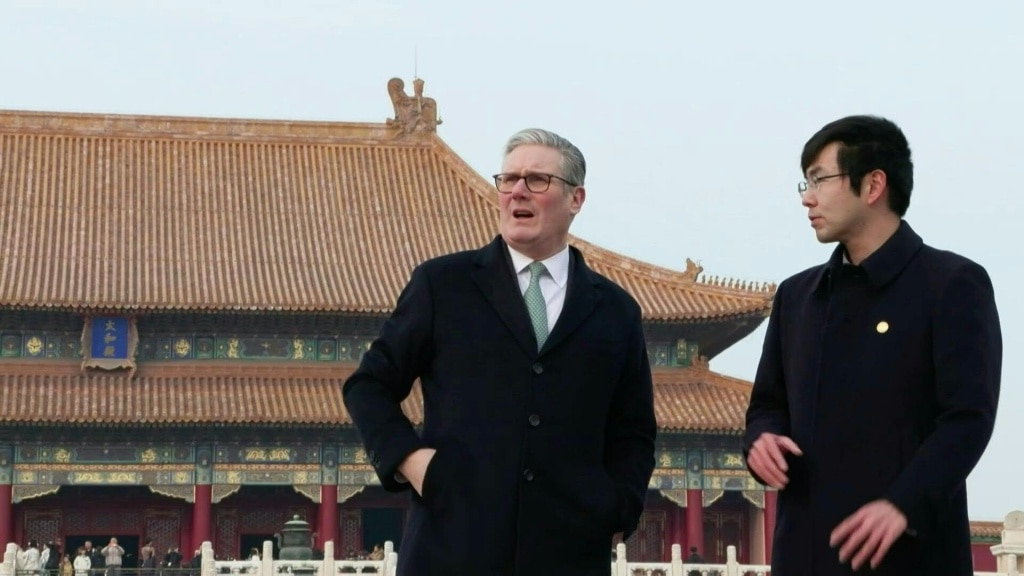
British Prime Minister Keir Starmer has embarked on a landmark diplomatic mission to China, marking the first visit by a UK leader in eight years. The trip signals a strategic pivot toward strengthening bilateral relations with Beijing despite cautions from former US President Donald Trump, who characterized such engagement as “very dangerous.
During high-level discussions with Chinese President Xi Jinping and Premier Li Qiang on Thursday, both nations emphasized the critical importance of enhanced cooperation. The meetings yielded substantial agreements, including a significant visa liberalization arrangement that permits British passport holders visa-free travel to China for stays under 30 days. This provision aligns the UK with approximately 50 other nations enjoying similar access, including France, Germany, Australia, and Japan.
Additional accords addressed collaborative efforts to combat migrant smuggling networks, expand British exports to Chinese markets, advance health initiatives, and reinforce the UK-China trade commission. In a move particularly beneficial to British industry, China committed to reducing tariffs on whisky imports from 10% to 5%.
President Xi noted the importance of strengthened dialogue between the two nations within today’s “complex and intertwined” global landscape. Starmer characterized the engagements as producing “real progress” and exactly the “level of engagement that we hoped for.”
The diplomatic outreach occurs against the backdrop of deteriorating UK-China relations since 2020, when Beijing implemented its national security law in Hong Kong. Despite these tensions, China remains Britain’s third-largest trading partner, and Starmer’s government views economic collaboration as essential to achieving its primary objective of stimulating UK economic growth.
The business delegation accompanying Starmer, comprising approximately 60 executives, witnessed significant commercial commitments, including AstraZeneca’s announcement of a $15 billion investment in China through 2030 to expand pharmaceutical manufacturing and research capabilities.