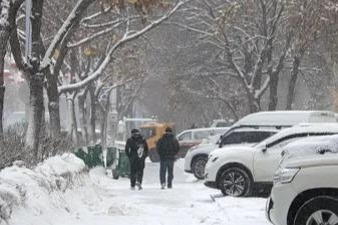
Meteorological authorities in China have issued warnings regarding four significant cold waves expected to sweep across the country throughout February, potentially disrupting the world’s largest annual human migration during the Spring Festival holiday period. According to Huang Zhuo, Deputy Director of the National Meteorological Center, these weather systems pose substantial challenges to transportation networks and energy infrastructure during the peak travel season.
The forecast indicates two major precipitation events between February 5-7 and February 10-13, bringing rain and snow to central and eastern regions. An additional cold air mass is projected to impact these areas during the initial phase of the Spring Festival holiday, which officially runs from February 15 to 23. Meteorological officials have identified four primary climate risks requiring coordinated preparedness measures across different regions.
Northern China must prepare for staged temperature declines, strong gales, and heavy snowfall, while northern sections of East and Central China, along with Southwest China, face potential low-temperature rain and snow events that could compromise transportation safety and energy distribution systems. Concurrently, southern and southwestern regions confront developing drought conditions and elevated forest fire risks, necessitating enhanced water resource management and fire prevention protocols.
The current weather patterns represent a continuation of January’s unusual conditions, which saw five cold waves—exceeding historical averages for the period. Since mid-January, meteorological drought has intensified across eastern and southern China, with particularly severe conditions reported throughout most of Fujian province, central Guangdong, and coastal areas of Zhejiang.
These weather developments coincide with the Spring Festival travel rush (chunyun), scheduled from February 2 to March 13—a 40-day period during which inter-regional passenger trips are projected to reach an unprecedented 9.5 billion, according to National Development and Reform Commission estimates. The convergence of extreme weather and record travel volumes presents complex challenges for transportation authorities and emergency management systems nationwide.