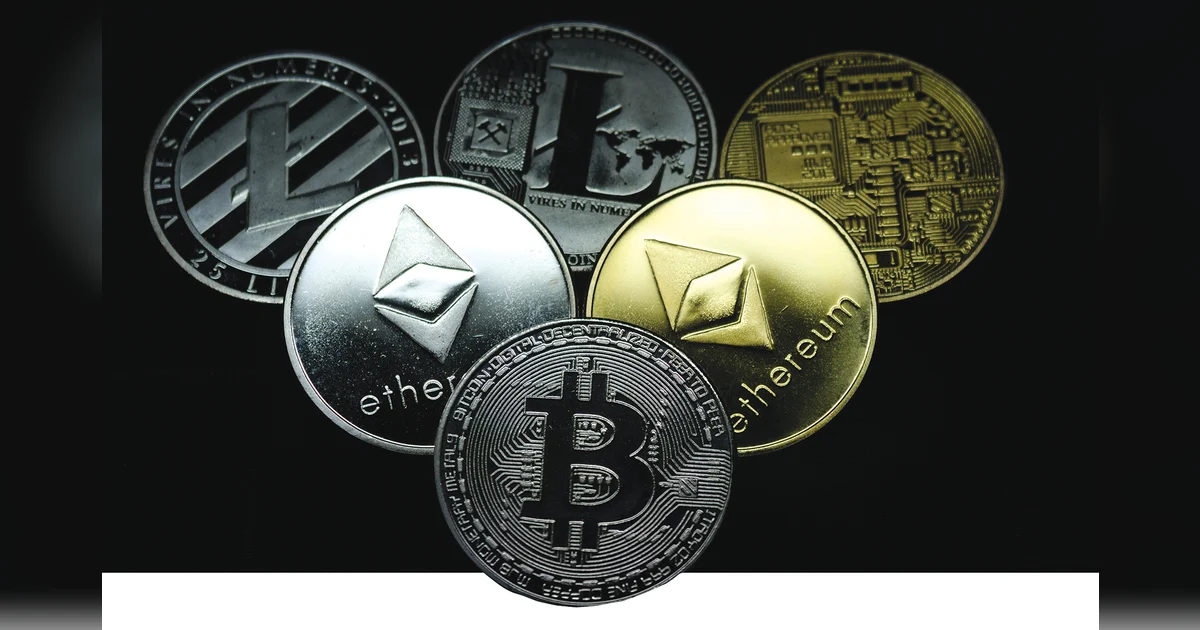
The Gulf Cooperation Council (GCC) is fundamentally transforming its approach to digital assets, evolving from speculative trading environments toward sophisticated regulatory frameworks designed for institutional capital. This strategic pivot positions the region as a global leader in crypto governance rather than merely a market for retail trading activity.
Regional transaction data underscores this transformation’s timing. According to Chainalysis, Middle East and North Africa crypto flows achieved unprecedented monthly volumes in late 2024, exceeding $60 billion in December alone. This substantial activity compelled GCC nations to choose between tolerating unregulated growth or establishing professionalized markets—with the UAE and Bahrain leading the professionalization charge.
Dubai’s Virtual Assets Regulatory Authority (VARA) exemplifies this new approach through comprehensive activity-based regulation. Rather than operating as a conventional crypto regulator, VARA functions as a market architect—establishing precise conditions for operational licensing, permitted activities, and firm behavior across supervision and enforcement domains. Two critical innovations distinguish VARA’s framework: comprehensive activity-based regulation matching large financial centers’ supervisory standards, and stringent marketing controls implemented in October 2024 to mitigate consumer risks associated with aggressive promotion.
Bahrain complements Dubai’s scale with regulatory agility through its Central Bank (CBB) Regulatory Sandbox. This controlled environment enables fintech firms to test innovative solutions with defined oversight, creating a pipeline from experimentation to full licensing. Bahrain’s early adoption of formal crypto regulations in 2019 established the nation as a testbed jurisdiction where new models can be trialed, supervised, and scaled responsibly.
The GCC’s regulatory advancement extends beyond exchange operations to encompass tokenization infrastructure and stablecoin frameworks. Abu Dhabi Global Market’s Financial Services Regulatory Authority finalized governance for Fiat-Referenced Tokens effective January 2026, while Qatar Financial Centre established legal recognition for digital assets including tokenization protocols and smart contracts in 2024.
This collective regulatory development transforms the Gulf into what industry observers term a ‘crypto governance laboratory’—multiple jurisdictions developing parallel frameworks with complementary strengths. Dubai emphasizes supervisory depth, Bahrain accelerates controlled innovation, ADGM develops institutional structures, and Qatar codifies tokenization frameworks. Even Oman has moved to formalize supervision through VASP registration requirements.
The fundamental shift involves recasting digital assets from speculative instruments to regulated financial infrastructure. This institutional framing attracts deeper capital pools—asset managers, corporate treasuries, and family offices—whose risk committees prioritize policy clarity over market excitement. While challenges remain regarding cross-jurisdictional coordination and enforcement consistency, the GCC’s unmistakable direction toward regulated digital asset infrastructure positions the region as a emerging global benchmark for institutional crypto adoption.