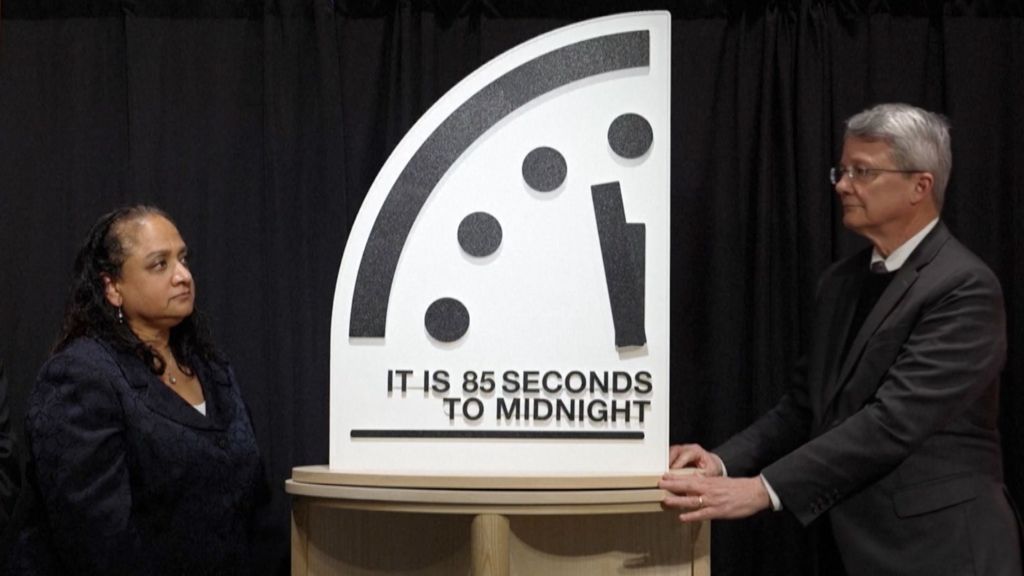
In a grave announcement that underscores escalating global tensions, the symbolic Doomsday Clock has been advanced to a mere 85 seconds until midnight—marking humanity’s closest brush with existential catastrophe since the clock’s inception eighty years ago. This critical adjustment by the Bulletin of the Atomic Scientists represents a substantial deterioration in global stability, primarily fueled by heightened nuclear threats arising from the conflict in Ukraine, persistent climate change crises, and the unchecked proliferation of disruptive technologies.
The Doomsday Clock, conceived in 1947, serves as a powerful metaphor visualizing humankind’s vulnerability to self-inflicted disasters, with midnight symbolizing total apocalyptic collapse. This year’s setting surpasses the previous record of 100 seconds to midnight, which held steady from 2020 through 2022, indicating a sharp downturn in international security conditions. The Science and Security Board of the Bulletin emphasized that this movement toward midnight reflects their assessment that ‘we are living in a time of unprecedented danger.’
Multiple converging factors contributed to this ominous forecast, including increased nuclear weapons modernization programs, insufficient climate action despite escalating extreme weather events, and growing biological research risks. The ongoing war in Ukraine has particularly exacerbated nuclear tensions, creating the most dangerous nuclear security environment in decades. Additionally, cyber-enabled disinformation campaigns and artificial intelligence technologies pose new threats to democratic institutions and global stability.
The clock’s keepers noted that while the situation remains dire, the clock’s purpose is to spur action rather than predict inevitable doom. They emphasized that human agency can reverse this trend through renewed diplomacy, climate cooperation, and responsible technology governance. Historical precedents exist—the clock retreated significantly after the Cold War ended, demonstrating that positive change remains possible when world leaders prioritize collective security.