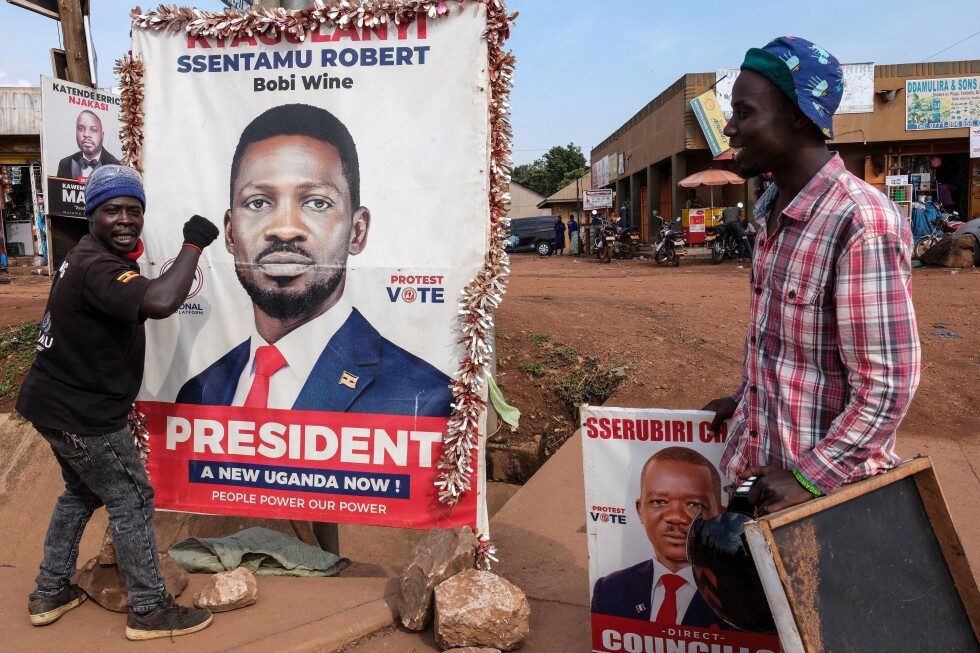
KAMPALA, Uganda — A dramatic political cat-and-mouse game unfolds in Uganda as opposition leader Bobi Wine continues to evade military capture for over a week, exposing deepening tensions within the nation’s political landscape. The 43-year-old musician-turned-politician, whose real name is Kyagulanyi Ssentamu, has been hiding since the disputed January 15 presidential election that returned President Yoweri Museveni to a seventh term.
In a recently circulated video recorded from an undisclosed location, Wine appeared in his family graveyard in central Uganda, openly mocking Army Chief Gen. Muhoozi Kainerugaba—the president’s son and presumed successor—for failing to locate him. ‘The whole army is looking for one person. It’s now coming to 10 days but they have failed to find me,’ Wine declared in the footage shared on social media platform X. ‘That means they are not as strong as they tell you.’
The election itself was marred by technical failures and government restrictions, including an internet shutdown and malfunctioning biometric voter identification systems intended to prevent ballot manipulation. Official results gave Museveni 71.6% of the vote, a outcome Wine has vehemently rejected.
The confrontation escalated dramatically when Ugandan soldiers raided Wine’s residence the day after the election, only to find the opposition leader had already gone underground. The situation intensified further on January 23 when soldiers conducted another raid on Wine’s home on the outskirts of Kampala, resulting in his wife Barbara Kyagulanyi being hospitalized with anxiety and bruises. She described to journalists how masked soldiers broke doors and windows, physically assaulting her while demanding information about her husband’s whereabouts.
Gen. Kainerugaba, who has developed a reputation for posting inflammatory tweets that he frequently later deletes, has taken responsibility for the raid but denies any mistreatment of Wine’s wife. The army chief has publicly labeled Wine a coward, ‘baboon,’ and ‘terrorist,’ claiming the opposition leader is wanted for criminal offenses—though government spokespersons simultaneously assert Wine is not actually wanted and may return home freely.
The very public feud between Wine and the president’s son has raised concerns among Ugandans about potential unrest. Wine commands substantial support among urban youth frustrated with government corruption, limited economic opportunities, and four decades of uninterrupted rule under Museveni. The 81-year-old leader, a long-time U.S. ally, has accused the opposition of attempting to incite violence during the electoral process.
As the standoff continues, Wine urges his followers to ‘do whatever is possible without breaking the law’ to demonstrate government vulnerabilities, highlighting what he characterizes as ‘family rule’ where ‘the ruling family is always above the law.’ The situation remains fluid, with many fearing that any escalation could trigger broader civil unrest in a nation that has historically been a haven for refugees fleeing violence elsewhere in the region.