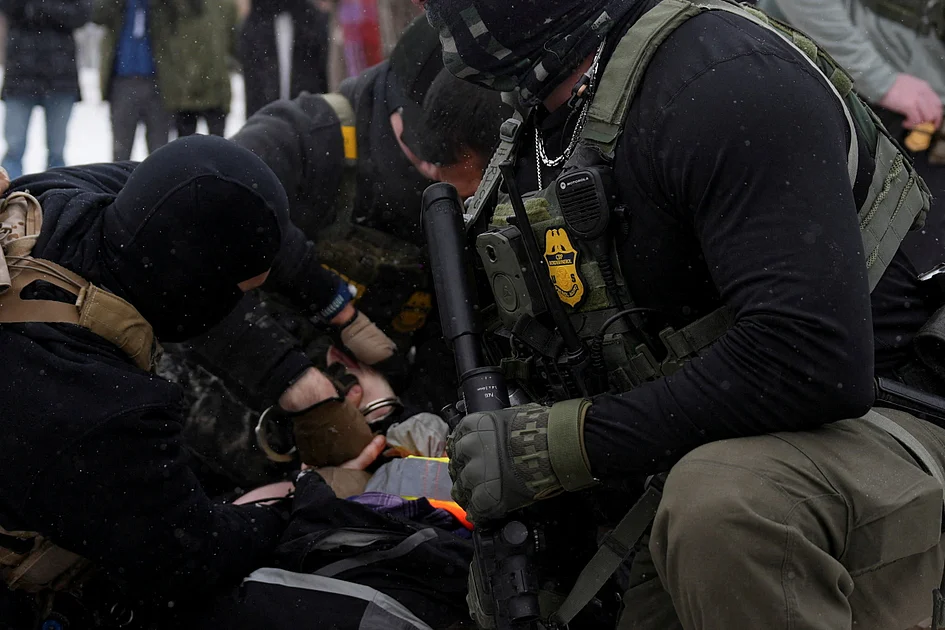
The Trump administration systematically opposed the expansion of body camera usage among immigration officers while simultaneously reducing oversight staffing levels, according to recent investigations. This policy shift occurred as federal officers were deployed in large numbers to Minneapolis and other urban centers, resulting in several violent confrontations.
Bystander footage capturing two fatal shootings of U.S. citizen protesters, including Saturday’s incident that claimed the life of an ICU nurse, has demonstrated the critical importance of video evidence in challenging official narratives. These recordings contradict claims that victims provoked violent encounters with immigration officers.
Despite body cameras being central to police reform efforts nationwide, the administration deliberately slowed a pilot program initiated in 2024. In June, officials urged Congress to reduce related funding by 75%, countering the broader trend toward increased law enforcement transparency. Concurrently, nearly all staffers working for three internal watchdogs overseeing immigration agencies were placed on paid leave, significantly impairing their ability to investigate potential abuses.
Darius Reeves, former director of ICE’s Baltimore field office, confirmed that the body camera program had progressed slowly under President Biden and was effectively abandoned under the Trump administration.
The administration’s approach to immigration enforcement intensified following Congressional approval of a $170 billion funding package for crackdown operations. This substantial financial injection is expected to fundamentally transform how ICE and Border Patrol operate.
Meanwhile, oversight capabilities have been dramatically reduced. The Office of the Immigration Detention Ombudsman, which previously employed over a hundred staff, now operates with just three full-time employees and two detailees. Complaint processing has consequently plummeted—from over 11,000 complaints in 2023 to just 285 between March and December 2025.
A lawsuit challenging these reductions argues that the administration effectively eliminated oversight offices without Congressional authorization, creating a system with no meaningful accountability mechanisms for addressing abuses.