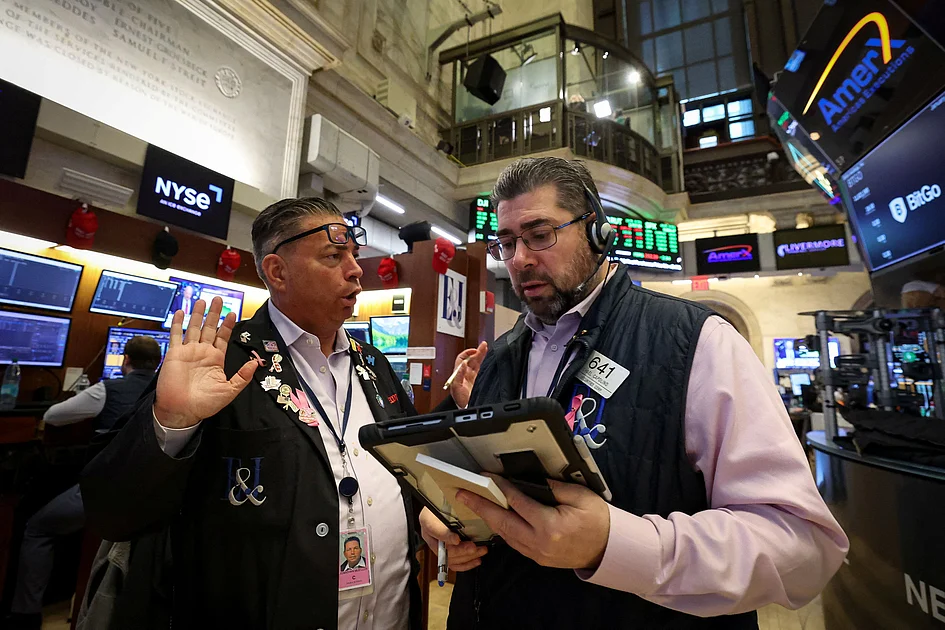
Global financial markets are commencing 2026 under the substantial weight of geopolitical tensions, creating an investment landscape where political narratives increasingly override fundamental economic indicators. This paradigm shift represents a fundamental transformation in market behavior, with political risk premiums expanding across asset classes at unprecedented velocity and scale.
The current environment reflects a convergence of concerning developments: softening US economic metrics, ongoing earnings season uncertainties, and escalating geopolitical flashpoints. These include renewed discussions regarding US-Greenland acquisition ambitions, Middle Eastern regime instability following Venezuela’s political transition, and persistent Russia-Ukraine tensions. This complex backdrop has created a market exceptionally sensitive to headline-driven volatility rather than traditional valuation metrics.
Market technicals reveal extraordinary conditions. Gold maintains historically elevated positions above $4,500, silver demonstrates exponential price structures approaching triple-digit territory, while crude oil rebounds toward $60 amid heightened hedging demand. US equity indices test record highs despite visible momentum deterioration, with the Dow approaching 50,000, Nasdaq near 26,300, and S&P 500 around 7,000. Even the US dollar defies rate-cut expectations through sustained safe-haven demand.
Razan Hilal, Market Analyst and CMT at FOREX.com, observes: ‘These conditions reveal the limitations of conventional forecasting. When overnight sentiment shifts can reverse market directions, disciplined exposure management and scenario planning surpass directional predictions in importance.’
This transformation manifests across investment vehicles. Precious metals, traditional geopolitical hedges, exhibit increasingly volatile trajectories. Silver’s dual nature as monetary and industrial asset attracts particular attention, though exponential advances carry significant correction risks. Crude oil’s price strength appears driven more by temporary supply concerns than structural narrative changes.
Equity markets display growing fragility beneath surface-level strength. Technology-heavy benchmarks show concerning divergences as capital rotates toward defensive positions. Market participants increasingly view stability above technical thresholds as conditional rather than guaranteed.
Hilal emphasizes: ‘This environment demands investment restraint. Successful navigation requires renewed focus on capital preservation fundamentals: defined invalidation levels, multi-timeframe analysis, and volatility-absorbing hedging strategies. Flexibility in exposure management becomes paramount as narratives evolve.’
As 2026 progresses, the primary challenge transforms from interpreting individual geopolitical events to managing their cumulative market impact. In this new paradigm, sophisticated risk management emerges as the primary strategic approach rather than secondary consideration.