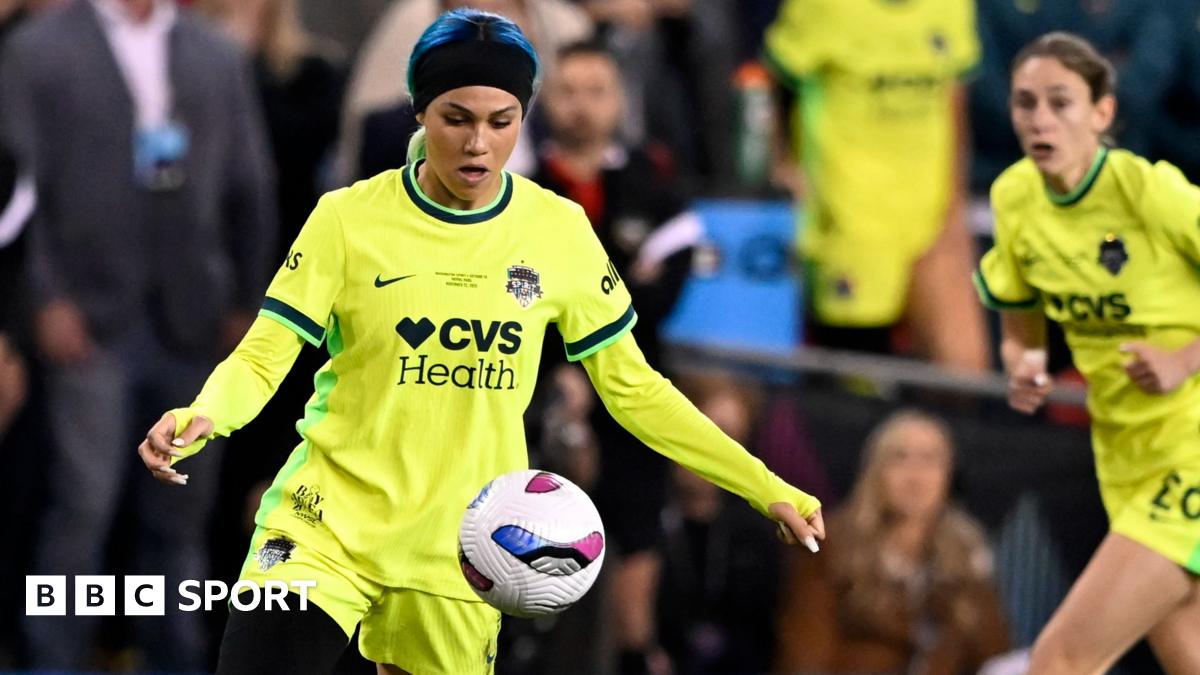
In a landmark moment for women’s football, American forward Trinity Rodman has secured a groundbreaking three-year contract with the National Women’s Soccer League’s Washington Spirit, establishing her as the sport’s highest-paid female athlete. The 23-year-old phenom, daughter of NBA legend Dennis Rodman, finalized the agreement valued at approximately $2 million annually, inclusive of performance bonuses, following her free agency period.
The negotiation process attracted intense international interest, with European powerhouses including Chelsea FC closely monitoring Rodman’s availability. Her agent, Mike Senkowski, confirmed the contract’s historic significance, noting it positions Rodman at the pinnacle of women’s football compensation when new NWSL salary cap provisions activate on July 1st. These provisions include the innovative ‘High Impact Player’ rule permitting teams to exceed the $3.5 million team cap by $1 million for exceptional talents.
However, the designation faces contention from Spanish sources who maintain that Barcelona’s Aitana Bonmatí—winner of three consecutive Ballon d’Or awards (2023-2025)—retains superior earnings when factoring currency conversion and contractual details. Despite this dispute, Rodman’s compensation represents a seismic shift in NWSL compensation structures.
Washington Spirit owner Michele Kang, who maintains multi-club investments including Olympique Lyonnais, characterized Rodman as “a generational player representing the future of this club and women’s soccer globally.” Rodman’s career trajectory supports this assessment: she propelled the Spirit to an NWSL Championship during her 2021 debut season, earned Rookie of the Year honors, and contributed significantly to Team USA’s gold medal victory at the 2024 Paris Olympics with three goals.
This record-setting agreement occurs against a backdrop of increasing financial competition in women’s football. While the NWSL pioneered professionalization, leagues including England’s Women’s Super League and Mexico’s Liga MX Femenil are now aggressively investing in talent acquisition, exemplified by recent high-profile transfers of American players to European clubs. Rodman’s retention signals the NWSL’s commitment to maintaining competitive relevance in the evolving global landscape of women’s sports economics.