Las Vegas witnessed the culmination of CES 2026 on January 9, establishing the event as the largest post-pandemic gathering in the technology calendar. With over 148,000 participants from 150+ countries, including 4,100 exhibitors and 1,200 startups, the conference demonstrated a pivotal evolution from theoretical concepts to practical implementation of cutting-edge technologies.
The exhibition highlighted the maturation of artificial intelligence into tangible, ecosystem-level applications alongside sustainability innovations and intelligent devices. Gary Shapiro, Executive Chair and CEO of the Consumer Technology Association, emphasized these technologies would “define the next decade of economic growth and competitiveness.”
Chinese technology firms emerged as dominant forces across multiple sectors including intelligent devices, automotive technologies, next-generation displays, and AI-driven lifestyle solutions. Their presentations attracted significant international attention, reflecting not only technical prowess but increasingly localized global strategies and partnership-oriented approaches.
Analysts noted Chinese companies are demonstrating deepened commitment to long-term innovation participation rather than mere export expansion. Many highlighted R&D collaborations across North America and Europe, alongside diversified supply chain networks spanning Asia, Latin America, and the Middle East.
Despite geopolitical complexities, Chinese brands reported sustained acceptance in North American markets. Kenneth Hong, Head of Public Relations for Hisense Americas, noted: “Political narratives have minimal impact on daily business operations. Retailers and consumers prioritize product quality above geopolitical considerations.”
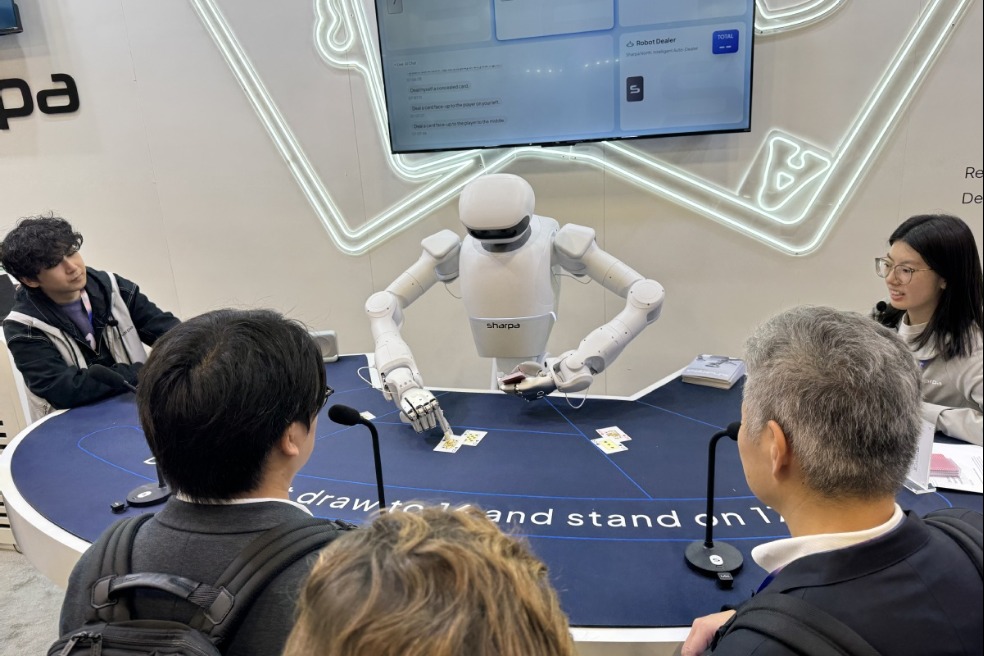
A defining conference theme was the transition to “physical AI” where intelligence integrates directly into machines capable of perceiving, interpreting, and acting within physical environments. Chinese robotics companies featured prominently, with Shanghai-based AgiBot demonstrating advanced humanoid platforms exhibiting real-world interaction and motion planning capabilities. CES data revealed over half of humanoid robotics exhibitors originated from China, underscoring the country’s expanding influence in embodied AI technologies.
The event featured significant cross-border collaboration dialogues, including a high-level discussion presided by Lenovo Chairman Yang Yuanqing with semiconductor leaders from Nvidia, AMD, Qualcomm, and Intel. This gathering emphasized global AI progress’s dependence on international cooperation rather than fragmentation.
Beyond commercial applications, CES 2026 addressed AI’s societal implications, particularly regarding global equity. Derrick Johnson, President of the NAACP, emphasized the need to “narrow, not widen, the gap between developing and developed countries through AI implementation.” Representatives from Ghana’s Ministry of Labour highlighted AI’s potential as an industrial upgrade catalyst and job creation mechanism in emerging economies.
Business and community leaders consistently emphasized the critical role of public policy in ensuring responsible AI deployment. Jacquelyn Puente of the US Hispanic Chamber of Commerce noted: “Without clear regulatory frameworks, AI systems cannot achieve meaningful organizational integration or deliver necessary solutions.” This sentiment was echoed by Claire Casey of the AARP Foundation, who stressed the necessity of public-private collaboration for scalable global solutions.