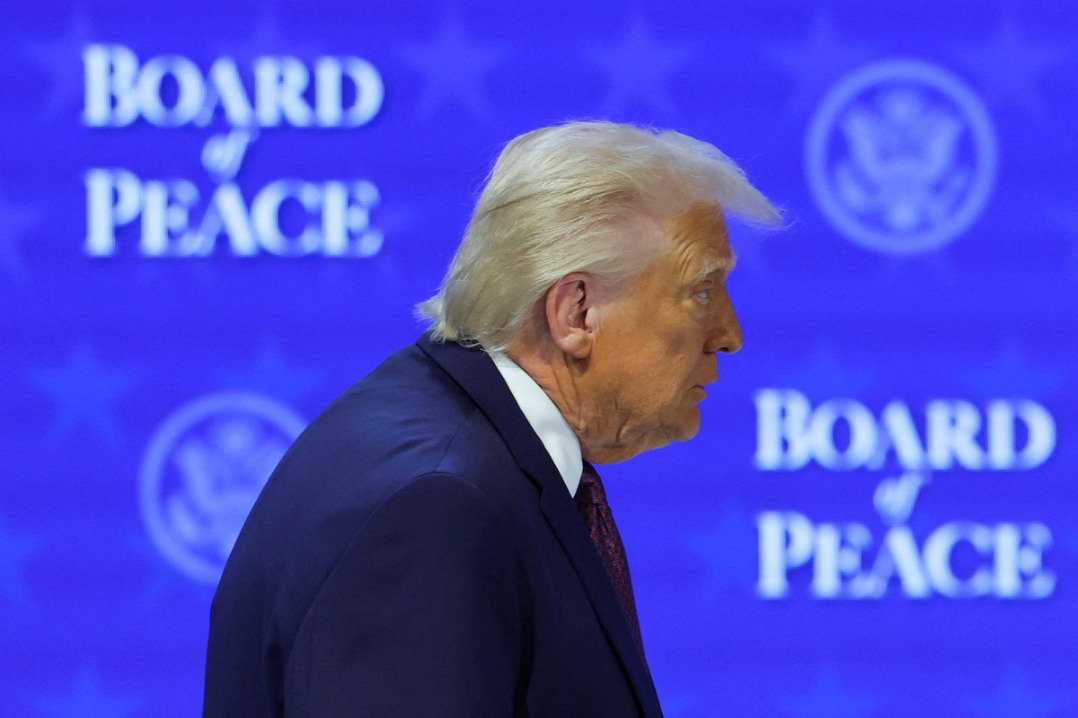
DAVOS, Switzerland – President Donald Trump’s appearance at the World Economic Forum has underscored a fundamental realignment of international relationships driven by his ‘America First’ doctrine. The inauguration of his Board of Peace initiative, focused initially on Gaza reconstruction, drew participation from fewer than 20 nations, with conspicuous absences from traditional allies including France, the United Kingdom, and Israel.
The diplomatic developments occurred alongside Trump’s announcement of a framework agreement with NATO concerning Greenland, further illustrating how domestic political priorities are recalibrating longstanding transatlantic partnerships. This strategic pivot has created unexpected opportunities for expanded international cooperation, particularly with China.
Policy experts from prominent think tanks have analyzed the profound implications of these shifts. Matthew Kroenig of the Atlantic Council warned that Trump’s confrontational approach has ‘destroyed much of the domestic political space in Europe’ for those advocating accommodation with the United States, potentially causing enduring damage to transatlantic relations.
Chatham House analysts examining the Greenland situation emphasized that European nations must accelerate ‘strategic autonomy to stop a hemorrhage of sovereignty,’ suggesting the Anti-Coercion Instrument could emerge as a significant tool in this new geopolitical landscape.
Forum participants noted China’s increasingly central role amid these transformations. Kimberley Botwright of the WEF highlighted China’s ‘systemic relevance’ in global value chains and clean technology sectors, observing that Chinese perspectives on shared priorities are receiving substantial international attention.
Academic Tom Harper from the University of East London characterized China as a ‘stabilizing force’ during this period of American institutional withdrawal, advocating for strengthened European-Chinese relations. WEF Managing Director Gim Huay Neo pointed to China’s 5% economic growth and its 15th Five-Year Plan as generators of ‘new opportunities for global businesses and cooperation.’
Chinese Vice-Premier He Lifeng reiterated China’s commitment to World Trade Organization reforms that enhance inclusivity for Global South nations, while cautioning against ‘rising unilateralism and protectionism’ in international affairs.