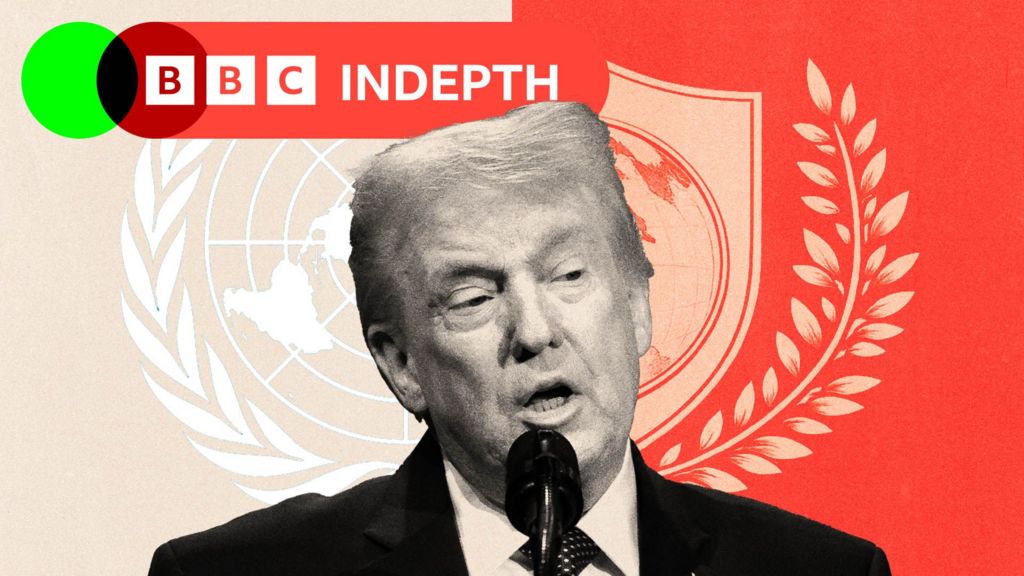
At the prestigious Davos Economic Forum this week, former US President Donald Trump unveiled his controversial ‘Board of Peace’ initiative with sweeping promises to end regional conflicts and establish what he termed “a beautiful, everlasting and glorious peace.” The ambitious proposal, however, has ignited intense international scrutiny and divided global responses.
The Board’s conceptual foundation emerged from previous US-led efforts to resolve the Gaza conflict, initially endorsed by a UN Security Council resolution. Yet it has since evolved into a vastly expanded global framework with Trump positioned permanently at its helm. Leaked charter details reveal extraordinary powers granted to Trump as lifetime chairman—including authority to determine membership, create or dissolve subsidiary bodies, and appoint his own successor. Membership comes with a staggering $1 billion price tag for permanent participation.
International reactions reflect deep geopolitical fractures. European leaders expressed sharp skepticism, with Poland’s Prime Minister Donald Tusk warning against manipulation through social media channels. Conversely, Hungarian Prime Minister Viktor Orban offered effusive support, declaring “If Trump, then peace.” Several nations including Sweden and Norway have declined participation pending further clarification, while the UK expressed concerns about Russian involvement in peace discussions.
The initiative emerges amidst a whirlwind of geopolitical maneuvers, including US military preparations against Iran, demands to acquire Greenland, and the capture of Venezuela’s leader. Critics perceive the Board as an attempt to dismantle postwar international architecture and replace it with Trump-dominated institutions. Slovenian Prime Minister Robert Golob openly criticized the project as “dangerously interfering with the broader international order.”
Trump addressed these concerns directly, stating the Board would operate “in conjunction with the United Nations” while simultaneously suggesting it might potentially replace the UN, which he criticized for underperformance. This contradictory messaging highlights the initiative’s ambiguous relationship with existing global governance structures.
Notably, the Board’s operational framework includes three subordinate layers focusing predominantly on Gaza, incorporating American officials, billionaires, former UN envoys, Arab ministers, and Palestinian technocrats. However, the leaked charter conspicuously omits specific mention of Gaza, despite several Muslim-majority nations joining explicitly for Palestinian peace objectives.
UN experts acknowledge the initiative reflects growing frustrations with the UN’s diminished peacemaking capabilities. Martin Griffiths, a UN veteran, noted this development represents “a reflection of the failure of the UN Security Council and of the UN writ large.” Former UN deputy secretary-general Mark Malloch Brown suggested the initiative might inadvertently push UN reform back onto the international agenda.
The Board faces immediate challenges in transitioning from Gaza ceasefire arrangements to sustainable peace, particularly with Israeli and Arab leaders maintaining fundamentally opposing positions on Palestinian statehood. Similarly, Ukraine’s participation remains uncertain given President Zelensky’s refusal to negotiate alongside Russian representatives.
Despite these obstacles, Trump maintains characteristically optimistic projections, claiming settlement in Ukraine is “coming very soon” and describing the Middle East as having only “little fires” remaining. His aspiration to assume the role of global peacemaker-in-chief marks a significant evolution in his political trajectory, though skepticism persists regarding the feasibility and motivations behind this unprecedented geopolitical venture.