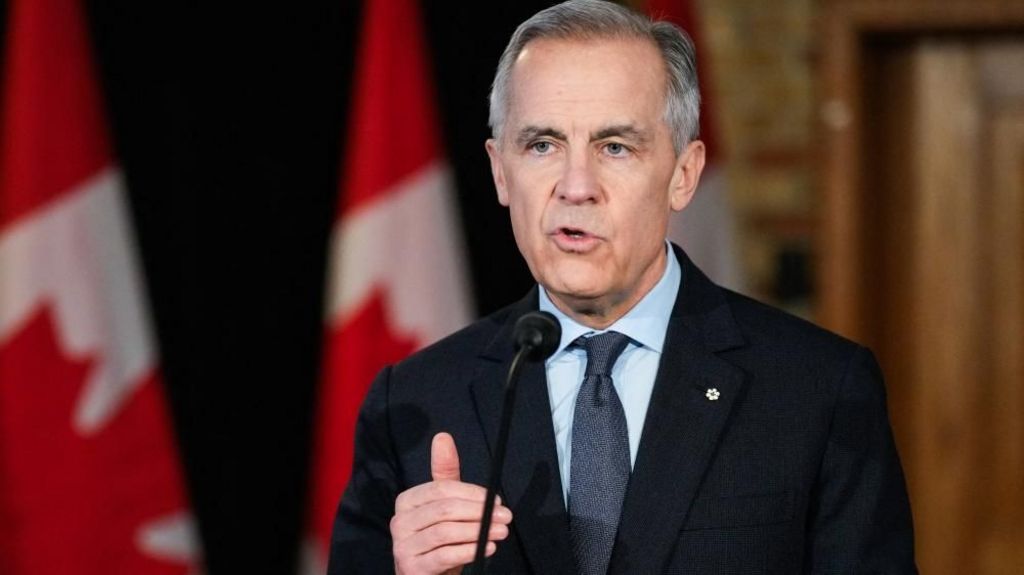
In a powerful address delivered at the historic La Citadelle fortress in Quebec City, Canadian Prime Minister Mark Carney issued a resounding call for national unity while articulating a bold vision for Canada’s role in an increasingly fragmented global landscape. The speech, marking his first major domestic appearance following controversial remarks at the World Economic Forum in Davos, served as both a unifying message to Canadians and a defiant assertion of national sovereignty.
Speaking before his federal cabinet at the 19th-century military stronghold originally built to defend against foreign invasion, Carney outlined ambitious plans to strengthen Canada’s economy amid worldwide instability. He emphasized the urgent need for decisive action, stating his government would ‘execute, fairly and fast’ to address pressing economic challenges and cost-of-living concerns through breaking down domestic trade barriers, accelerating major projects, and pursuing trade agreements with non-US allies.
The Prime Minister delivered a pointed rebuttal to recent comments by U.S. President Donald Trump, who had asserted that ‘Canada lives because of the United States.’ While acknowledging the remarkable partnership between the two nations, Carney firmly declared: ‘Canada doesn’t live because of the United States. Canada thrives because we are Canadians.’ This statement underscored his commitment to defending Canadian values in what he described as a ‘divided’ world.
Carney expanded on themes previously introduced in Davos, where he had warned that the rules-based international order ‘is not coming back’ and urged middle powers to resist economic coercion by greater powers. Though not mentioning Trump by name, he indicated that the previous ‘bargain’ involving American hegemony had become obsolete.
The speech has drawn mixed reactions internationally. While Mexican President Claudia Sheinbaum praised Carney’s stance as ‘in tune with current times,’ U.S. Commerce Secretary Howard Lutnick accused Canada of arrogance and characterized the Prime Minister’s position as ‘political marketing’ designed for domestic consumption. Lutnick warned that Canada was jeopardizing its privileged trade relationship with the United States, particularly as both nations prepare to renegotiate the USMCA agreement.
Domestically, opposition figures have challenged Carney to translate his rhetoric into concrete action. Conservative MP Michelle Rempel Garner emphasized that simply re-announcing projects or creating new bureaucracies would be insufficient following such strong international statements.
The address concluded an eight-day international trip that included stops in Qatar and China, where Carney secured agreements to reduce tariffs and increase foreign investment in Canada. Recent polling indicates approximately half of Canadians view the Prime Minister favorably, with 47% expressing approval of his government’s performance.