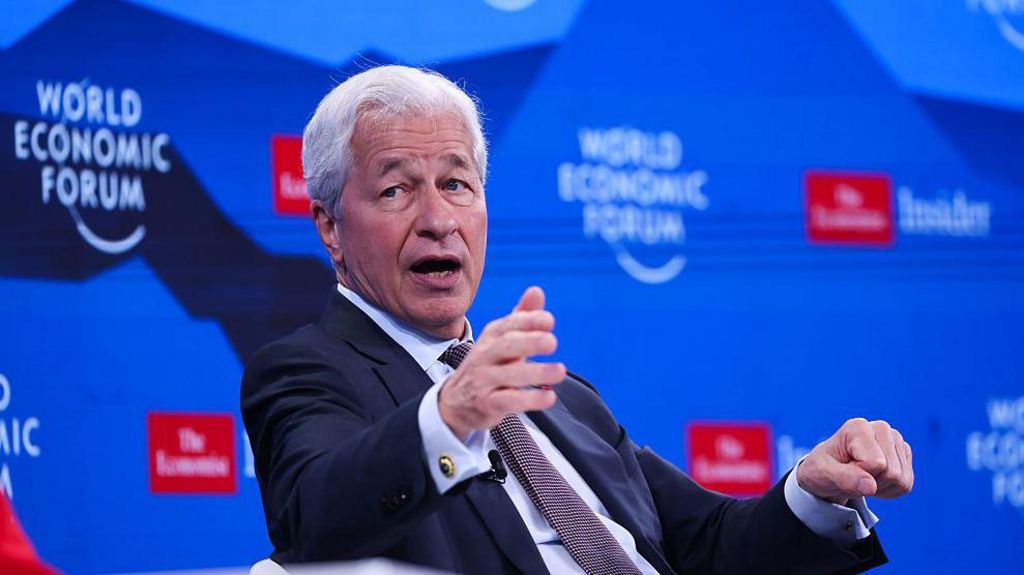
JPMorgan Chase CEO Jamie Dimon has issued a stark warning against former President Donald Trump’s proposal to cap credit card interest rates at 10%, characterizing the measure as potentially catastrophic for the U.S. economy. Speaking at the World Economic Forum in Davos, Dimon asserted that such a cap would drastically reduce credit access for approximately 80% of Americans and negatively impact multiple sectors including restaurants, retailers, travel companies, and educational institutions.
The controversial proposal, which Trump initially floated during his 2024 presidential campaign and recently reaffirmed via Truth Social on January 13, calls for a one-year interest rate limitation effective from January 20, 2026. The former president framed the measure as protection for consumers against what he described as predatory practices by credit card companies. However, the mechanism for implementation and its legal enforceability remain unspecified.
Dimon challenged the proposal’s feasibility, suggesting that if proponents like Senators Bernie Sanders and Elizabeth Warren support the concept, it should first be tested in their home states of Vermont and Massachusetts. The banking executive emphasized that the most severe consequences would not be borne by financial institutions but rather by small businesses and municipalities as consumers struggle to meet payment obligations.
The financial industry has united in opposition to the concept, with banking associations warning that rate caps would ultimately restrict credit access and prove devastating to families and small businesses. Market reactions were immediately observable following Trump’s social media announcement, with shares of major credit card companies including American Express, Visa, Mastercard, and Barclays experiencing declines.
Currently, the average credit card interest rate in the United States stands at approximately 20%, significantly higher than the proposed cap. While positioned as consumer protection, economists and financial experts caution that artificial rate limitations could constrict credit availability particularly for higher-risk borrowers, potentially exacerbating rather than alleviating financial pressures on American consumers.