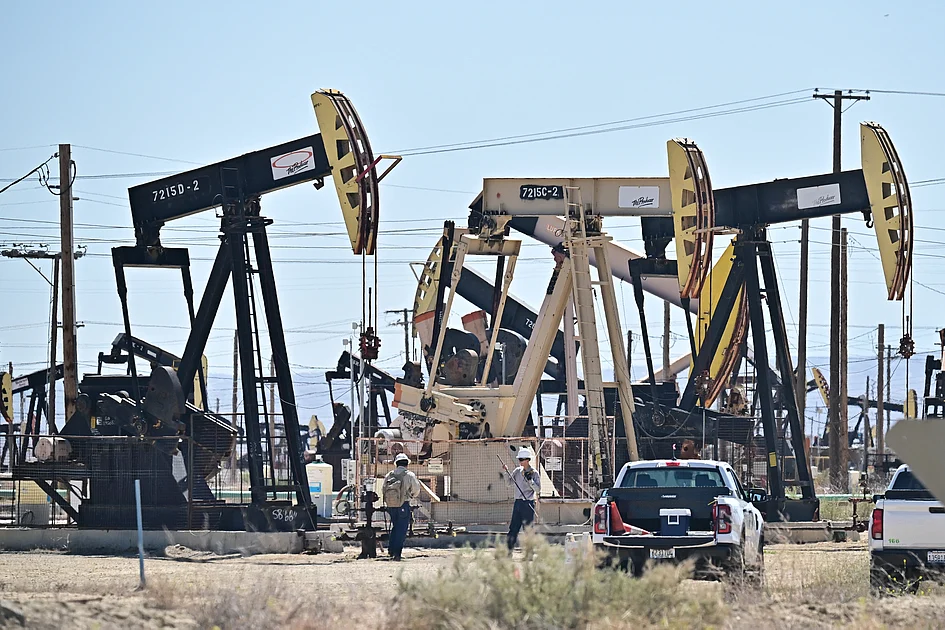
A substantial supply surplus is poised to dominate global oil markets throughout 2026, effectively imposing a ceiling on prices despite ongoing geopolitical instability, according to a definitive assessment by the International Energy Agency (IEA). The agency projects that worldwide oil supply will expand by approximately 2.5 million barrels per day (bpd) this year, reaching a staggering 108.7 million bpd. This follows an even larger increase of around 3 million bpd recorded in 2025.
This robust production growth, originating predominantly from non-OPEC+ nations including the United States, Canada, Brazil, Guyana, and Argentina, is dramatically outpacing the modest rise in global consumption. The IEA forecasts demand growth of merely 930,000 bpd for 2026, driven almost entirely by emerging economies outside the OECD. This supply-demand imbalance, nearly a threefold difference, has created a significant market buffer that is expected to confine benchmark crude prices within a volatile $60 to $70 per barrel range, suppressing any sustained price rallies.
The physical evidence of this glut is unmistakable. Global observed inventories swelled by approximately 470 million barrels throughout 2025, equating to a build of nearly 1.3 million bpd. A sharp acceleration occurred in November alone, with stocks jumping over 75 million barrels, primarily in onshore crude storage. Preliminary data indicates this trend continued into December. Consequently, OECD industry stockpiles have climbed to 2.84 billion barrels, aligning with the five-year average but standing markedly higher than levels seen a year prior.
Refining activity surged late in the previous year, with global crude throughputs rising by about 2 million bpd in December to 85.7 million bpd ahead of planned seasonal maintenance. For 2026, refinery runs are forecast to average 84.6 million bpd. However, refining margins weakened considerably toward the end of 2025, especially in Europe, where middle distillate cracks halved from their November peaks—a symptom of softening industrial demand and burgeoning product inventories.
Despite repeated geopolitical shocks, prices have consistently failed to maintain upward momentum. North Sea Dated crude averaged just $62.64 a barrel in December, marking a sixth consecutive monthly decline and reaching lows unseen since early 2021. Benchmark prices remain roughly $16 a barrel below the previous year’s levels. A brief January price spike of $6, triggered by renewed tensions involving Iran and Venezuela, quickly subsided as market attention returned to overwhelming fundamentals.
Leading financial institutions echo this cautious outlook. Goldman Sachs analysts noted that geopolitical risk premiums are being overwhelmingly “absorbed by the weight of surplus supply,” projecting Brent to trade within the $60-$70 band. JPMorgan issued a more bearish warning, suggesting prices could test the low-$60s or even high-$50s if demand weakens further or if OPEC+ accelerates its production increases, citing a market that is “structurally long barrels.” Morgan Stanley tempered extreme downside fears, noting that OPEC+ retains sufficient spare capacity and policy flexibility to intervene should prices fall too sharply.
Notably, actual supply disruptions have failed to materially tighten market balances. While Iranian exports fell by 350,000 bpd from October highs and Venezuelan shipments dropped under tightened U.S. sanctions, these losses were offset by a strong rebound in Russian output, which rose by 550,000 bpd month-on-month in December to a multi-year high. Temporary disruptions in Kazakhstan also had a muted impact amid the pervasive supply abundance.
While OPEC maintains a more optimistic demand outlook citing steady economic growth, it acknowledges headwinds from trade tensions and slowing industrial activity. The U.S. Energy Information Administration has similarly highlighted relentless growth in U.S. shale output and rising exports from the Americas as key factors ensuring well-supplied markets. Analysts conclude that with storage tanks brimming and supply growth set to vastly exceed demand, abundance—not scarcity—is the defining characteristic shaping the direction of global crude markets for the foreseeable future.