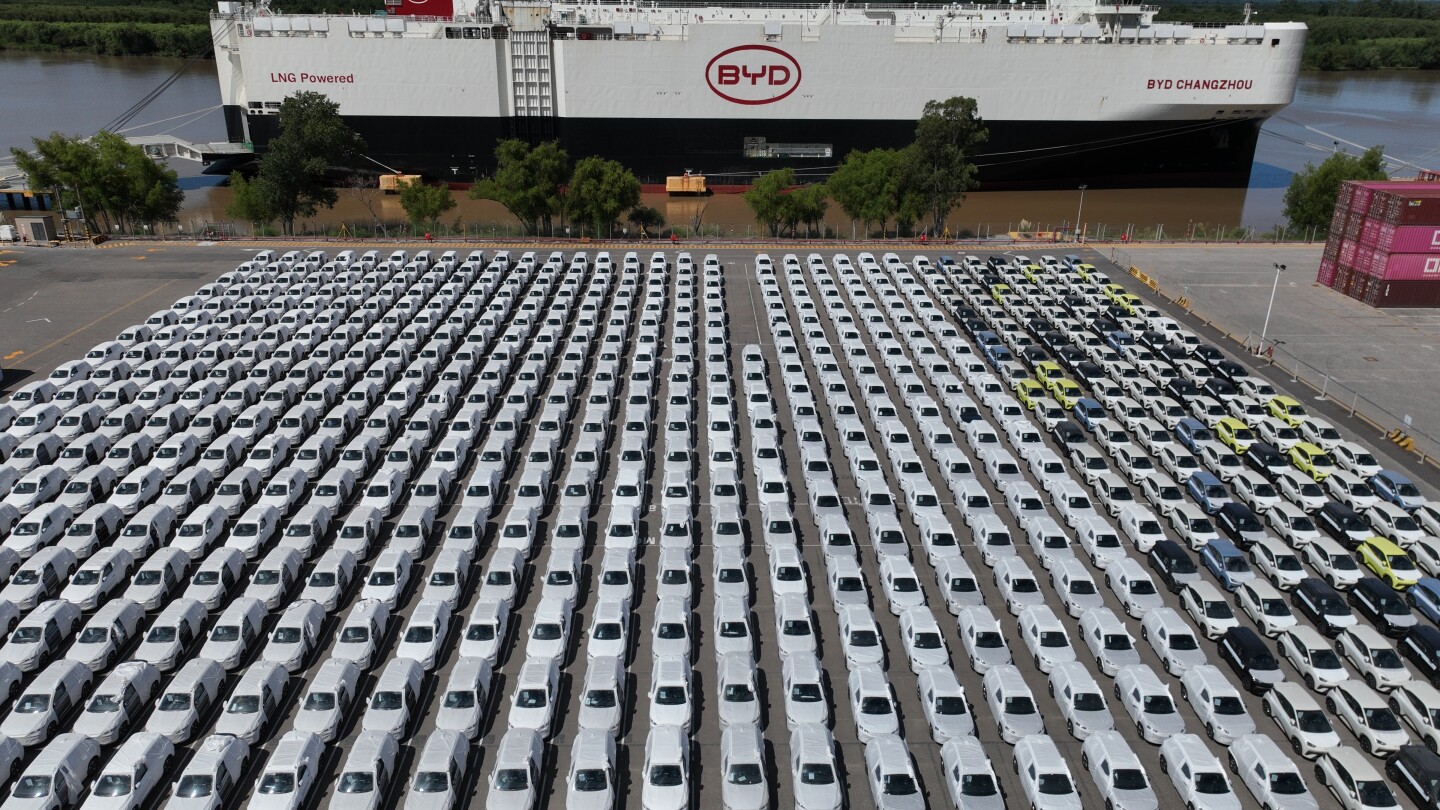
ZÁRATE, Argentina — A monumental shift is underway in Argentina’s automotive landscape as thousands of Chinese electric and hybrid vehicles disembark at the port of Zárate, signaling a dramatic transformation in one of South America’s traditionally most protected economies. The arrival of BYD’s massive shipment represents both a symbolic and commercial breakthrough for Chinese automakers expanding their global footprint.
This development comes amid President Javier Milei’s radical economic liberalization agenda that has dismantled decades of Peronist protectionism. Where previous governments imposed stiff tariffs and import restrictions to shield local industry, Milei has flung open Argentina’s doors to foreign goods, resulting in a record 30% surge in imports last year.
Chinese manufacturers, particularly BYD, are positioned to capitalize on Milei’s new zero-tariff quota allowing 50,000 electric and hybrid vehicles into the country this year. The policy specifically benefits vehicles under $16,000—a price point where Chinese automakers hold significant competitive advantage over Western and Japanese rivals.
The economic relationship between Argentina and China has deepened substantially, with Chinese imports surging 57% last year compared to a 9.6% increase from the United States. Chinese investment has simultaneously flowed into Argentina’s energy and mining sectors, creating comprehensive economic ties.
While Western automakers express concern about unfair competition and opposition lawmakers warn of market disruption, industry analysts note that Chinese manufacturers possess both the technological capability and pricing structure to dominate this new market opening. The aging state of Argentina’s electrical infrastructure and lack of specialized repair networks for EVs present current limitations, but Chinese companies appear well-positioned for long-term dominance.
The arrival of Chinese EVs also carries geopolitical significance, occurring simultaneously with the European Union’s hesitation to ratify a landmark free trade agreement with Mercosur nations. As European manufacturers struggle to compete with Chinese pricing, Argentina’s market becomes another front in the global EV competition.