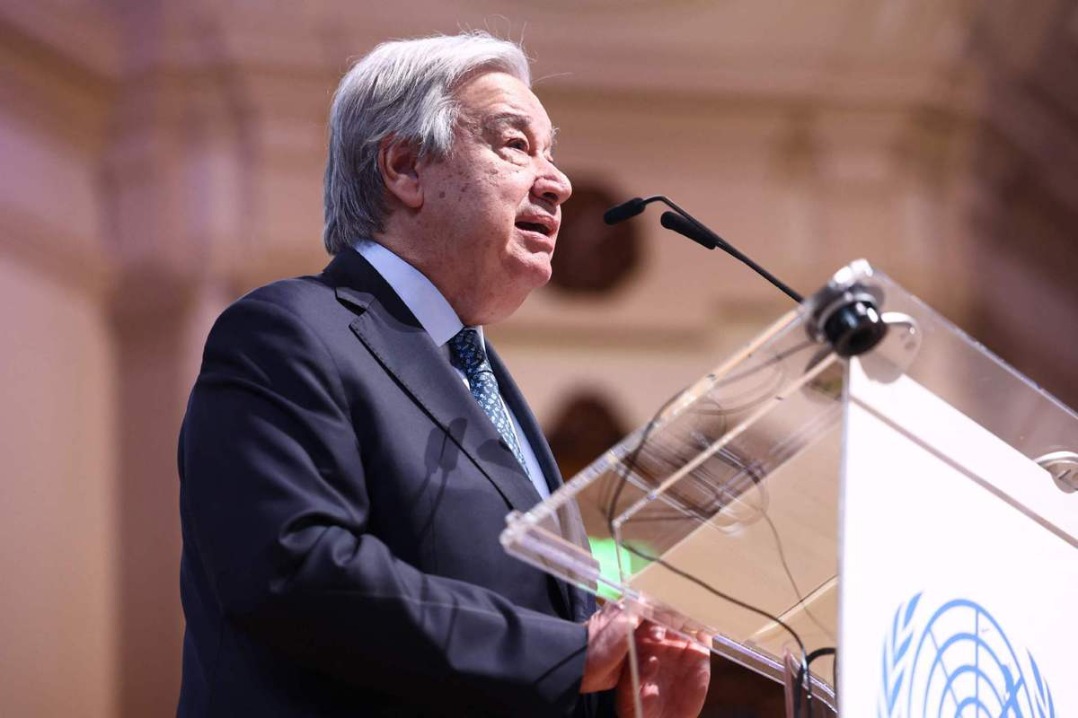
United Nations Secretary-General Antonio Guterres has delivered a stark warning about the deteriorating global order, directly criticizing United States foreign policy for systematically eroding international legal frameworks. Speaking at the UNA-UK conference in London—the historic venue of the inaugural UN General Assembly—Guterres articulated profound concerns about Washington’s shifting approach to global governance.
In his address marking the UN’s 80th anniversary, the Secretary-General highlighted a dangerous trend where powerful nations increasingly disregard multilateral institutions in favor of unilateral actions. Guterres specifically referenced recent geopolitical developments, including the controversial US seizure of the Venezuelan president and former President Donald Trump’s persistent assertions regarding Greenland’s annexation, as emblematic of this troubling shift.
The 76-year-old diplomat, who concludes his term in late 2026, presented a sobering assessment during his BBC interview: “There are those that believe the power of law should be replaced by the law of power.” He acknowledged the UN’s current limitations in compelling major powers to adhere to the organization’s founding charter, particularly the principle of sovereign equality among member states.
This tension represents a historic nadir in UN-US relations, exacerbated by the previous administration’s frequent questioning of the organization’s relevance. The current global landscape, Guterres argued, demands updated mechanisms for international cooperation, noting that “1945 problem-solving” proves inadequate for addressing 2026’s complex challenges.
Despite recognizing “brazen violations” of international law, the Secretary-General maintained his call for collective resistance against unilateralism, asserting that confrontation with powerful nations remains essential for creating a better world order. His remarks underscore a pivotal moment in international relations where the very foundations of postwar diplomacy face unprecedented strain.