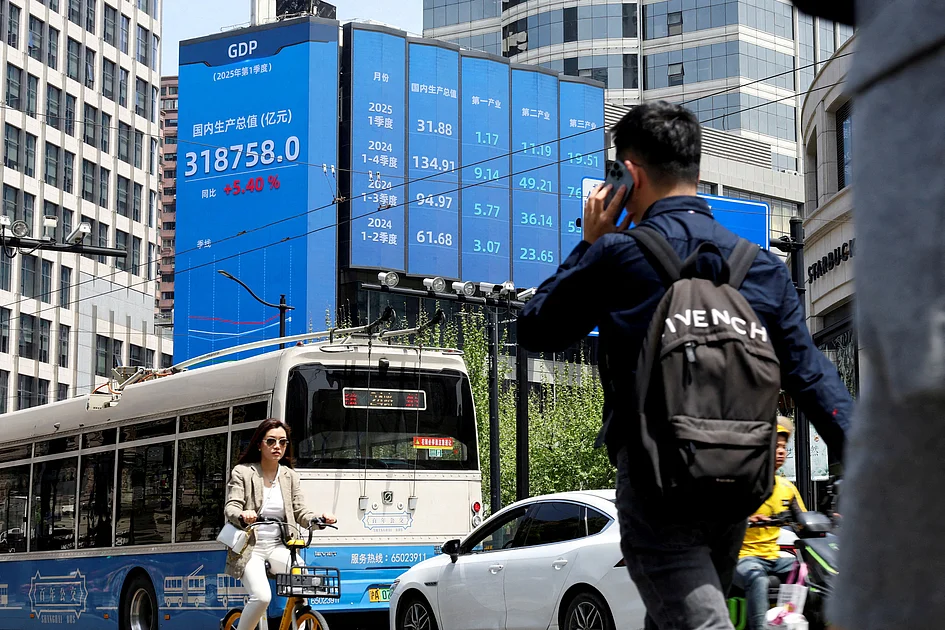
China’s economic expansion decelerated to its slowest pace in three years during the fourth quarter of 2025, registering 4.5% year-on-year growth according to National Bureau of Statistics data released Monday. While the full-year growth of 5.0% met Beijing’s official target, the quarterly slowdown reveals underlying vulnerabilities in the world’s second-largest economy.
The manufacturing sector and export performance provided crucial support throughout 2025, with China achieving a record trade surplus of nearly $1.2 trillion. This remarkable export resilience stemmed from strategic diversification to non-U.S. markets amid ongoing trade tensions and smaller-than-anticipated tariff increases from Washington.
However, this external strength masks significant domestic weaknesses. The economy faces mounting challenges from persistently soft domestic demand, a protracted property market crisis, and deflationary pressures. Fixed asset investment contracted by 3.8% in 2025—the first annual decline since records began in 1996—while property investment plummeted 17.2%.
Consumption indicators remain particularly concerning. December retail sales grew a meager 0.9%, falling short of analyst expectations and November’s 1.3% growth. This consumption weakness persists despite stable employment figures, with the urban survey-based jobless rate holding at 5.1% in December.
Policy makers have begun implementing supportive measures, with the central bank recently cutting sector-specific interest rates and indicating potential further reductions in reserve requirements. The government maintains its commitment to “proactive” fiscal policy and ambitions to significantly increase household consumption’s share of the economy over the next five years.
Analysts note that structural reforms addressing income growth and social safety net strengthening will be crucial for rebalancing the economy away from its current export and investment dependence toward sustainable consumption-led growth.