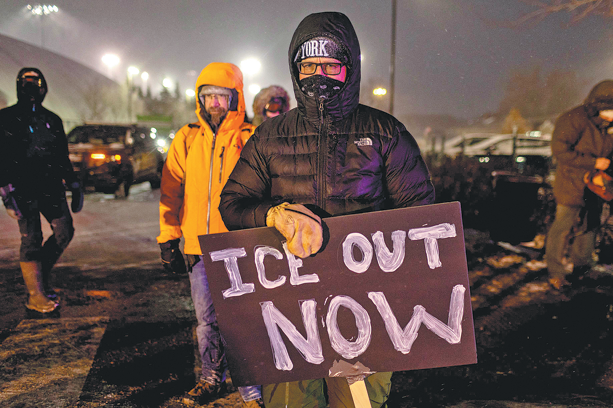
MINNEAPOLIS — A fatal shooting involving a U.S. Immigration and Customs Enforcement (ICE) agent has ignited a severe constitutional crisis in Minneapolis, exposing deep fractures between federal authorities and local governance. The January 7th incident, which resulted in the death of 37-year-old American citizen Renee Good during an enforcement operation, has triggered widespread protests and escalated into a nationwide debate over immigration enforcement tactics and federal overreach.
The situation deteriorated further when another ICE agent shot a Venezuelan immigrant in the leg exactly one week later in the same vicinity, amplifying public outrage and street demonstrations. Minneapolis Mayor Jacob Frey characterized the escalating tensions as “not sustainable,” demanding the immediate withdrawal of ICE personnel from the city and state.
The Trump administration has deployed nearly 3,000 additional ICE and Border Patrol agents to the Minneapolis area following allegations of welfare fraud involving immigrants. This substantial federal presence has created a volatile standoff with Minnesota Governor Tim Walz joining Mayor Frey in condemning the deployment as unconstitutional and provocative.
Adding to the extraordinary circumstances, the Pentagon has placed approximately 1,500 active-duty soldiers from Alaska on standby for potential deployment to Minnesota. Defense officials, speaking anonymously to The Associated Press, indicated these troops specializing in arctic operations could be mobilized if President Trump invokes the Insurrection Act—a rare 19th-century law permitting military intervention in domestic affairs.
The shooting itself has become a subject of sharply conflicting narratives. Homeland Security Secretary Kristi Noem, alongside President Trump and Vice-President JD Vance, defended the ICE agent’s actions, characterizing Good’s alleged attempt to run over officers as “an act of domestic terrorism.” Conversely, Mayor Frey maintains that video evidence shows Good posed no legitimate threat and that the agent acted recklessly.
Policy experts warn this confrontation represents broader national tensions. Darrell West, a senior fellow at the Brookings Institution, noted that graphic video footage of the shooting has galvanized protesters across America who perceive it as a gross injustice. “ICE agents seem less well-trained than police officers and don’t have the same ability to de-escalate personal confrontations,” West observed, adding that many fear similar incidents could occur elsewhere.
Former Iowa House Representative Gregory Cusack attributed the crisis to “the predictable outcome of the militarization of police forces, the hiring of masked thugs armed to the teeth, and the ugly branding of anyone who disagrees with this administration as ‘the enemy’.”
Christopher Galdieri, a political science professor at Saint Anselm College, expressed concern that federal authorities show no indications of reconsidering their approach: “ICE, DHS, and the White House probably see the chaos and protests as beneficial to them.”
As protests continue and federal presence expands, Minneapolis has become the epicenter of a national confrontation that tests the boundaries between federal power and local autonomy, with implications that could reshape immigration enforcement and police practices across the United States.