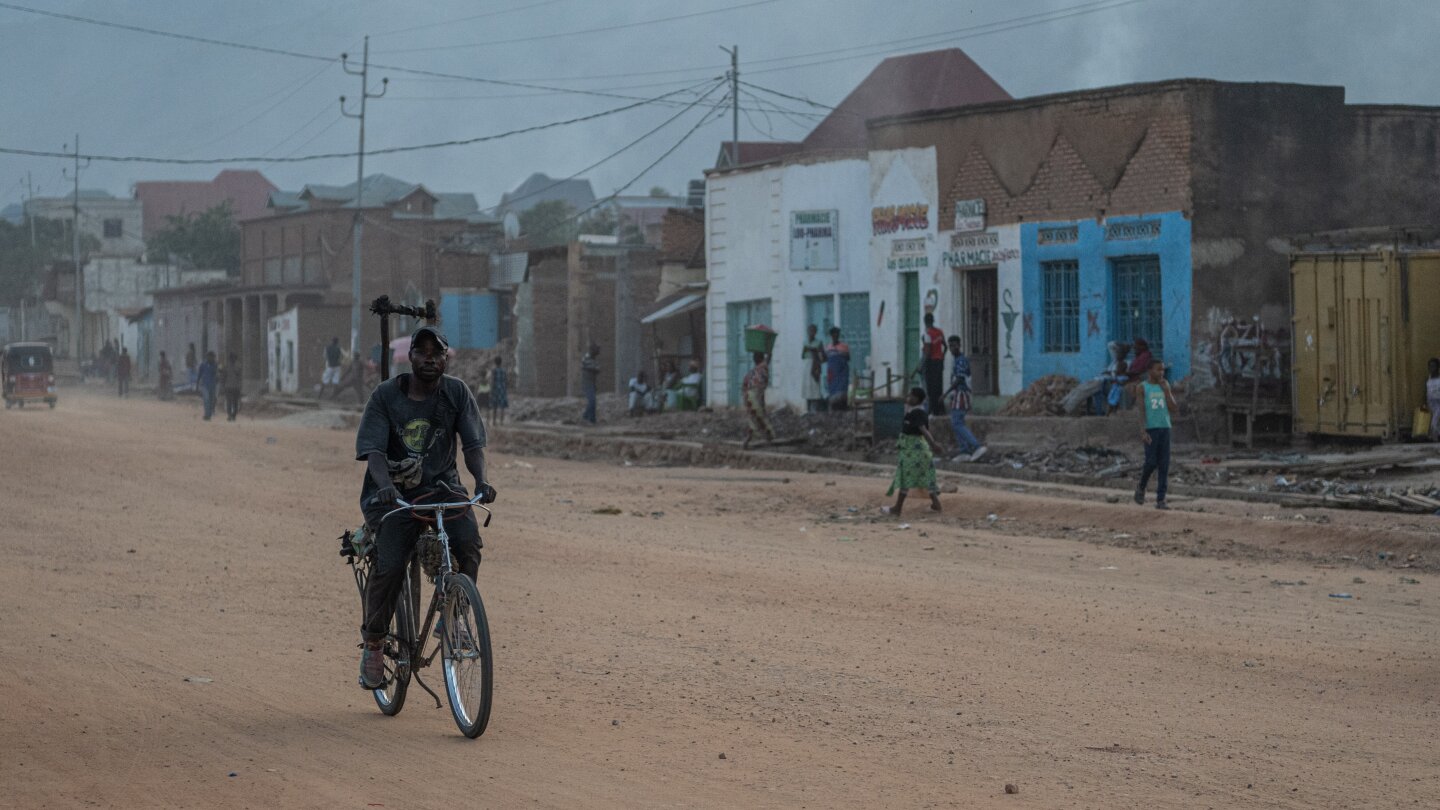
DR Congo military forces, alongside pro-government Wazalendo militia fighters, have successfully reoccupied the strategic eastern town of Uvira following a month-long occupation by Rwanda-backed M23 rebels. The retaking of this crucial territorial foothold in South Kivu province marks a significant development in the ongoing conflict that continues to destabilize the mineral-rich region despite internationally-mediated peace efforts.
Army spokesperson Mak Hazukay confirmed in an official statement that governmental forces initiated deployment throughout Uvira and surrounding areas on Sunday, aiming to consolidate defensive positions and ensure civilian security. This military advancement occurred precisely one month after M23 rebels captured the town during a rapid offensive that displaced approximately 300,000 residents and claimed over 1,500 lives according to government spokesperson Patrick Muyaya.
Local resident Alain Ramazani reported witnessing the return of Congolese soldiers after their prolonged absence, noting their coordinated presence with Wazalendo militia members. However, Observatory for Human Rights director Ghislain Kabamba, based in Uvira, observed that despite military patrols circulating through the town Monday morning, sporadic gunfire persisted amid concerns about widespread weapon proliferation among various armed groups and civilians.
The rebel group had previously announced their withdrawal as a “unilateral trust-building measure” requested by United States mediators to facilitate peace negotiations. This development occurs against a complex geopolitical backdrop where Congo, supported by U.S. intelligence and UN experts, alleges Rwandan sponsorship of M23—a rebel force that has expanded from hundreds to approximately 6,500 combatants since 2021 according to United Nations assessments.
The capture of Uvira had carried particular strategic significance as it represented the final major government stronghold in South Kivu province following February’s fall of provincial capital Bukavu. Its seizure had enabled rebels to establish a consolidated corridor of influence across eastern Congo while bringing the conflict to the doorstep of neighboring Burundi, raising concerns about potential regional escalation given Burundi’s longstanding military presence in the area.
This military shift unfolds despite high-level diplomatic efforts, including recent meetings between Congolese President Félix Tshisekedi and Rwandan leader Paul Kagame with U.S. mediators in Washington to reaffirm peace commitments. The persistent violence underscores the profound challenges in resolving a conflict involving over 100 armed groups vying for control in eastern Congo, which has created one of the world’s most severe humanitarian crises with more than 7 million displaced persons according to UN refugee agencies.