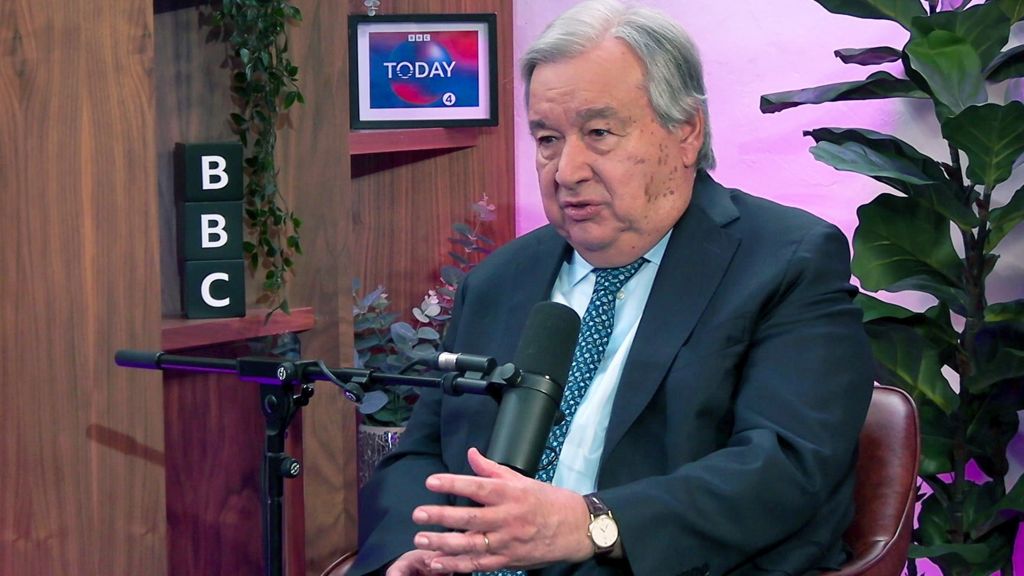
In a striking critique of American foreign policy, United Nations Secretary-General António Guterres has declared that the United States is operating with impunity while prioritizing its own power over established international legal frameworks. During an exclusive interview with BBC Radio 4’s Today programme, Guterres expressed profound concern that Washington’s “clear conviction” now dismisses multilateral solutions as irrelevant, favoring instead the unilateral “exercise of U.S. power and influence, sometimes at the expense of international law norms.”
The Secretary-General’s remarks arrive amidst escalating global tensions, including recent U.S. military actions in Venezuela and former President Donald Trump’s repeated threats to annex Greenland. Guterres identified these developments as symptomatic of a broader crisis threatening the foundational UN principle of member state equality.
Guterres directly addressed Trump’s previous criticisms of the United Nations, acknowledging the organization’s struggle to enforce compliance with the UN Charter among member states. While insisting the UN remains “extremely engaged” in resolving major conflicts, Guterres conceded that the institution lacks leverage compared to powerful nations. He questioned whether this influence is being utilized to achieve lasting solutions or merely temporary fixes to complex international problems.
The UN leader highlighted urgent need for institutional reform to address “dramatic problems and challenges” facing its 193 member states. He particularly criticized the UN Security Council’s structure, noting its ineffective representation of the modern world and the problematic veto power exercised by permanent members (France, China, Russia, the UK, and US), which has repeatedly obstructed resolutions on conflicts in Ukraine and Gaza.
Guterres called for compositional changes to the Security Council to “regain legitimacy” and “give voice to the whole world,” including limitations on veto powers to prevent unacceptable “blockages” of international action. He specifically questioned why “three European countries” held permanent seats while other regions remained underrepresented.
Regarding Gaza, Guterres countered allegations of UN ineffectiveness, explaining that aid distribution was impossible during periods when Israel blocked access to the territory. “Whenever Israel would not allow us to move into Gaza, we couldn’t move into Gaza,” he stated, adding that the UN was prepared to deliver aid “provided we had the conditions.”
Despite acknowledging a world “brimming with conflict, impunity, inequality and unpredictability,” Guterres maintained an optimistic outlook. He emphasized the necessity of confronting powerful nations to create a better world, even as questions multiply about the decline of multilateralism and some leaders’ failure to defend international law.