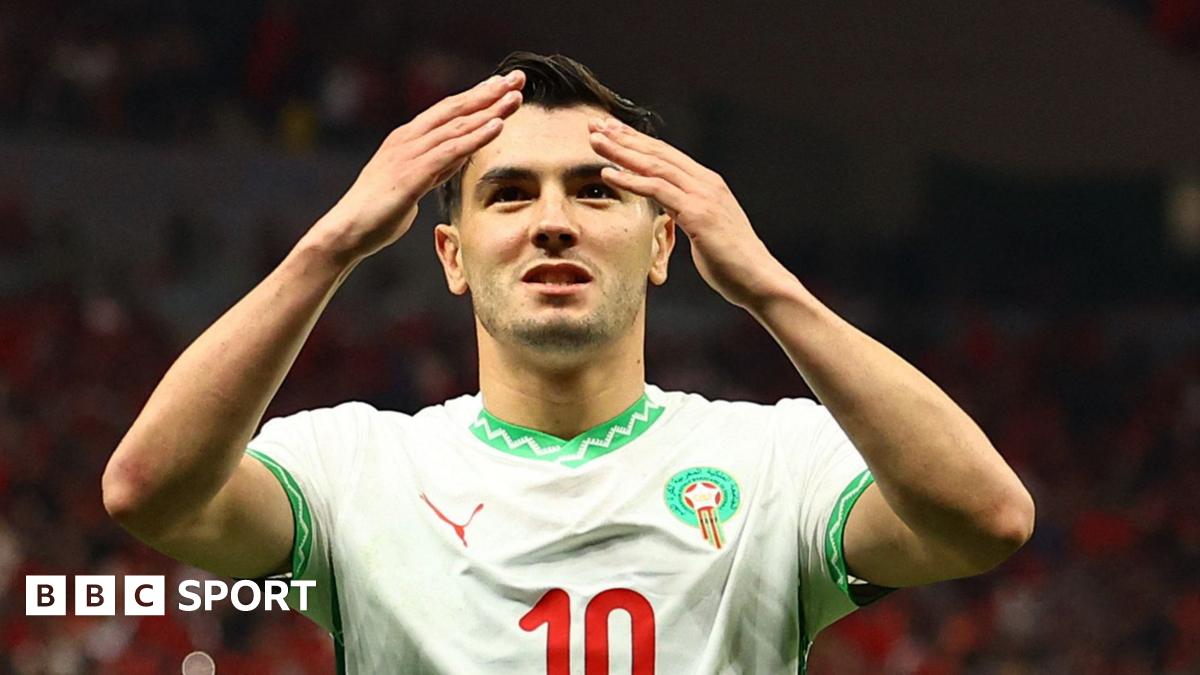
As Morocco prepares for Sunday’s Africa Cup of Nations final, all eyes are on their unexpected national icon: Real Madrid forward Brahim Diaz. The 26-year-old scoring sensation, born in Malaga to a Spanish mother and Moroccan father, has become the tournament’s top scorer while embodying a modern multicultural identity that resonates across continents.
Diaz’s football journey began in the tight spaces of futsal courts, where he developed the technical excellence that now defines his game. His patient development path—from modest Malaga teams to Manchester City’s academy and ultimately to Real Madrid—reflects a family philosophy prioritizing education and gradual growth over shortcuts. Despite early injury setbacks at Madrid and a transformative loan spell at AC Milan where he won Serie A wearing the iconic number 10, Diaz persevered with unwavering self-belief.
His 2023 decision to represent Morocco rather than Spain culminated years of courtship by the Moroccan federation. Since debuting in 2024, he has scored 13 goals in 21 appearances, finding the net in every round leading to the AFCON semifinals—a first for any Moroccan player. His celebration gesture, lifting elbows and hands as if to say “what looks difficult becomes easy with work,” has become a national symbol of perseverance.
Beyond the pitch, Diaz’s impact resonates throughout Moroccan society. His social media engagement surpasses that of African superstars like Mohamed Salah, while his image dominates billboards and promotional campaigns. Though maintaining a deliberately private profile at the request of both Real Madrid and the Moroccan federation, his spontaneous traditional dance celebration during the tournament went viral and became a national victory ritual.
Now, as Morocco seeks only its second AFCON title while hosting the tournament amid enormous expectations, Diaz carries the hopes of a nation that sees in him the embodiment of their footballing ambition. His technical excellence in crowded spaces, experience in high-pressure matches, and dual cultural heritage have positioned him as the symbol of a modern, ambitious Morocco—with Sunday’s final offering the ultimate stage for his remarkable journey.