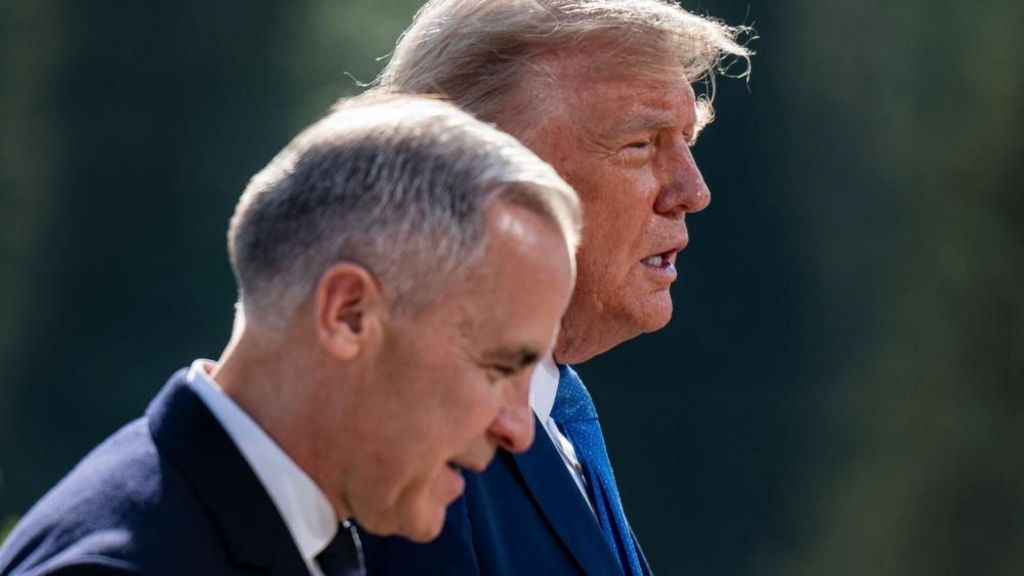
The first year of Donald Trump’s second presidential term has catalyzed a profound transformation in Canada’s domestic policies and international positioning, marking a significant departure from historical bilateral norms. As the United States’ northern neighbor, Canada has experienced substantial shifts across economic, political, and social dimensions under the new administration’s policies.
Trade relations have undergone particularly dramatic changes. The imposition of tariffs on key Canadian sectors prompted immediate retaliatory measures, most notably in alcohol trade where American spirits faced provincial boycotts. Data reveals a staggering decline in US liquor imports from $63.1 billion in late 2024 to approximately $9.5 billion by late 2025. This economic reorientation extends beyond beverages, with Mexican vehicle imports surpassing American counterparts for the first time in history according to Statistics Canada.
Public sentiment has mirrored these structural shifts. Pew Research Center findings indicate 64% of Canadians now hold negative views toward the United States—the highest negative perception recorded in over two decades. Approximately 77% express limited confidence in President Trump’s leadership, with overwhelming majorities characterizing him as ‘arrogant’ (90%) and ‘dangerous’ (75%). Notably, nearly half (46%) now advocate for treating the US as either an ‘enemy or potential threat’ according to Angus Reid polling.
Tourism patterns have reflected this cooling relationship. Cross-border travel to the United States declined by over 25%, resulting in an estimated $5.7 billion loss for American tourism. Canadians have redirected their travel spending domestically, generating record-breaking C$59 billion in tourism revenue from May to August, while Mexican destinations experienced a 12% surge in Canadian visitors.
Politically, the Trump effect triggered unexpected realignments. Justin Trudeau’s resignation—accelerated by ministerial protests over his handling of US relations—paved the way for Mark Carney’s ascent. The former central banker leveraged economic credentials and a staunch sovereignty platform to achieve an improbable Liberal victory in April’s election, reversing what had appeared to be certain Conservative dominance.
In response to North American uncertainty, Canada has embarked on strategic diversification of international partnerships. Prime Minister Carney’s recent China visit—the first by a Canadian leader since 2017—produced tariff-reduction agreements and market access expansions, despite previous campaign rhetoric labeling China a security threat. Similar diplomatic thaws are anticipated with India following years of tension over extraterritorial allegations, alongside strengthened ties with Gulf states and European nations.
This comprehensive recalibration represents Canada’s most significant foreign policy reorientation in modern history, balancing economic pragmatism against sovereignty concerns while navigating an increasingly complex geopolitical landscape.