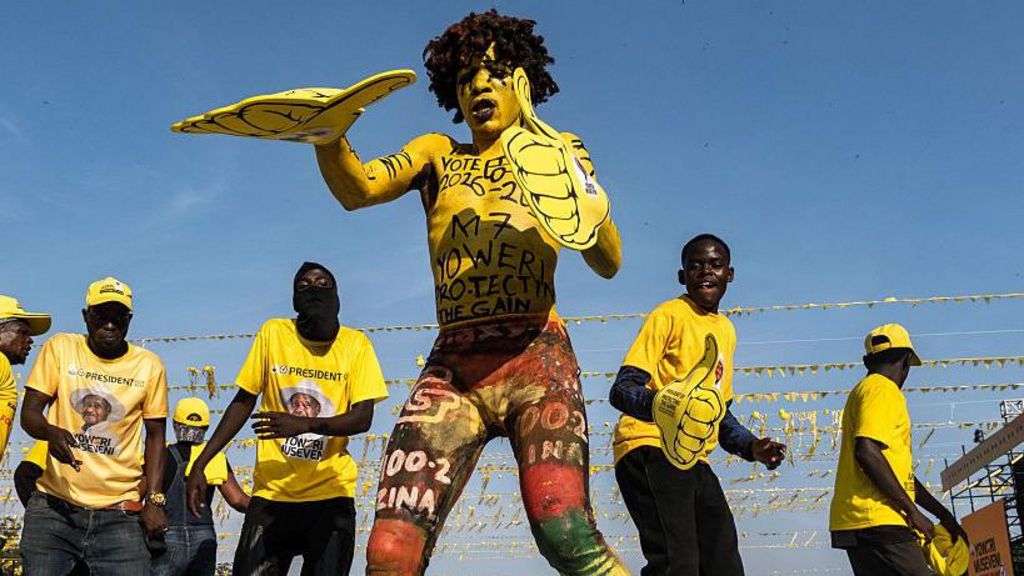
President Yoweri Museveni has secured a decisive electoral victory with 72% of the vote, nearly matching his historic 1996 performance of 74%. The 81-year-old leader, who seized power in 1986, framed this outcome as validation of his four-decade rule and its delivery of political and economic stability. His campaign emphasized ambitious development targets, particularly Uganda’s transition to middle-income status by 2030, with nascent oil exports via a Tanzanian pipeline positioned as the economic cornerstone.
Opposition leader Bobi Wine, the charismatic former pop star, rejected the results as fraudulent while claiming to be in hiding following security force raids. His vote share declined significantly from 35% in 2021 to 25% despite Uganda’s predominantly youthful population. Wine alleges systematic electoral manipulation including violent suppression of rallies, though he has provided no substantiating evidence for ballot-stuffing claims.
Beyond the contested outcome, analysts identify deeper political transformations within Uganda’s power structures. The ruling National Resistance Movement’s internal elections in August 2025 revealed intense succession maneuvering, marked by factional bargaining and alleged bribery. This process signaled the rising influence of General Muhoozi Kainerugaba, the president’s son and army chief, who now oversees all security matters—a concentration of power with profound implications given Uganda’s history of military-political entanglement.
Presidential authority has gradually decentralized to a tight circle of relatives: Museveni’s daughter manages his schedule, his half-brother handles diplomatic relations, and his son-in-law shapes economic policy. This restructuring suggests Uganda’s future is increasingly directed by Museveni’s family, even without formal title changes. As veteran figures are sidelined, the regime appears focused more on succession planning than engaging with an opposition weakened by repression and co-option.
Political analyst Allan Kasujja notes that meaningful change in Uganda occurs gradually rather than through dramatic electoral shifts. The recent election thus represents less a transformative moment than a ritual legitimizing these underlying power transitions within the established political framework.