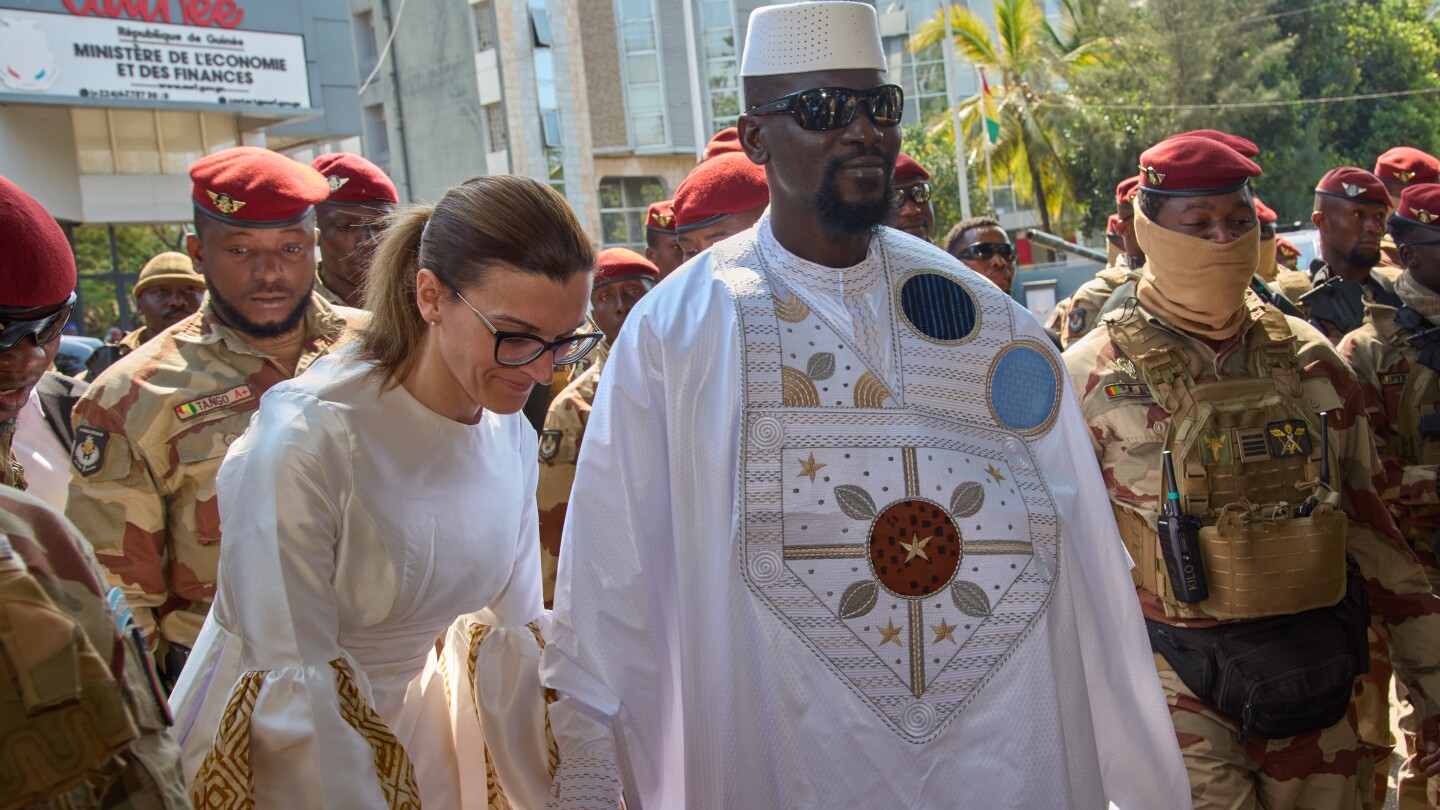
CONAKRY, Guinea — General Mamadi Doumbouya, who seized control of Guinea through a military coup in 2021, was formally sworn in as the nation’s president on Saturday. The ceremony took place at a newly constructed 55,000-seat stadium in Conakry’s suburbs, attended by African leaders and regional commission representatives.
Doumbouya’s inauguration follows his decisive victory in last year’s presidential election, a remarkable political turnaround given his initial pledge not to seek office. The electoral process occurred under a controversial new constitution that eliminated prohibitions against military leaders running for office while extending presidential terms from five to seven years.
During his address, the new president acknowledged “the immense responsibility entrusted to me by the Guinean people” while characterizing his mandate as “a commitment to address various governance challenges” rather than a personal honor.
The inauguration revealed deep divisions within Guinean society. Supporters like 28-year-old law student Rokiatou Kaba expressed optimism about Guinea’s international resurgence and economic prospects. However, skeptics including economics student Hassmiou Baldé dismissed the proceedings as “theater” and a “charade,” accusing Doumbouya of eliminating genuine opposition before the election.
Despite controlling substantial mineral wealth, Guinea faces significant developmental challenges. According to World Food Program data, approximately half of the country’s 15 million citizens live in poverty while experiencing record food insecurity.
The junta has prioritized the Simandou iron ore project, a predominantly Chinese-owned mining initiative at the world’s largest iron deposit, as central to economic revitalization. After decades of delays, production commenced late last year, with authorities anticipating thousands of new jobs and secondary investments in education and healthcare.
Guinea represents one of several West African nations experiencing military takeovers since 2020, where armed forces have capitalized on public dissatisfaction with security deterioration, economic underperformance, and contested elections.