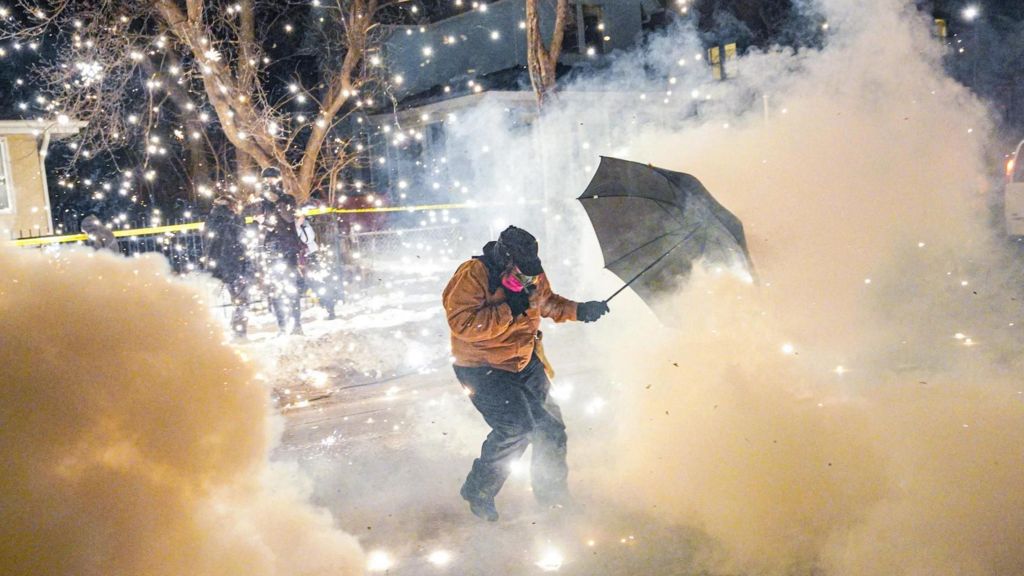
Minneapolis has become the epicenter of escalating national tensions over immigration enforcement as President Donald Trump threatens to invoke the 19th-century Insurrection Act. This unprecedented move would authorize active-duty military deployment for domestic law enforcement following violent protests triggered by federal immigration operations.
The crisis intensified Wednesday when Department of Homeland Security agents shot Julio Cesar Sosa-Celis, a Venezuelan national, during an altercation involving a shovel and broom handle. DHS Secretary Kristi Noem characterized the incident as an ‘attempted murder of federal law enforcement,’ stating agents were ‘ambushed and attacked’ while pursuing Sosa-Celis, who had previous convictions for unlicensed driving.
This shooting follows the fatal January 7th encounter where ICE agent Jonathan Ross killed 37-year-old Renee Nicole Good, sparking nationwide demonstrations and raising $1.4 million for her family through online fundraising. Agent Ross’s supporters have concurrently raised $740,000 for his legal defense.
The administration maintains both shootings were acts of self-defense, while Minnesota Democrats vehemently disagree. Governor Tim Walz, who recently ended his reelection bid following a welfare fraud scandal, directly appealed to Trump to ‘turn the temperature down,’ having previously labeled ICE as a ‘modern-day Gestapo.’ Minneapolis Mayor Jacob Frey declared the situation ‘unsustainable’ and demanded ICE’s withdrawal from the city.
Despite a federal judge denying Minnesota prosecutors’ request for a temporary restraining order against ICE, approximately 3,000 federal officers remain deployed throughout the state. Wednesday night witnessed renewed clashes in Minneapolis’s Hawthorne neighborhood, where protesters damaged government vehicles and assaulted officers with fireworks, ice, and snowballs according to police reports.
The standoff represents a critical test of federal authority versus local governance, with the rarely used Insurrection Act looming as a potential constitutional flashpoint in American law enforcement history.