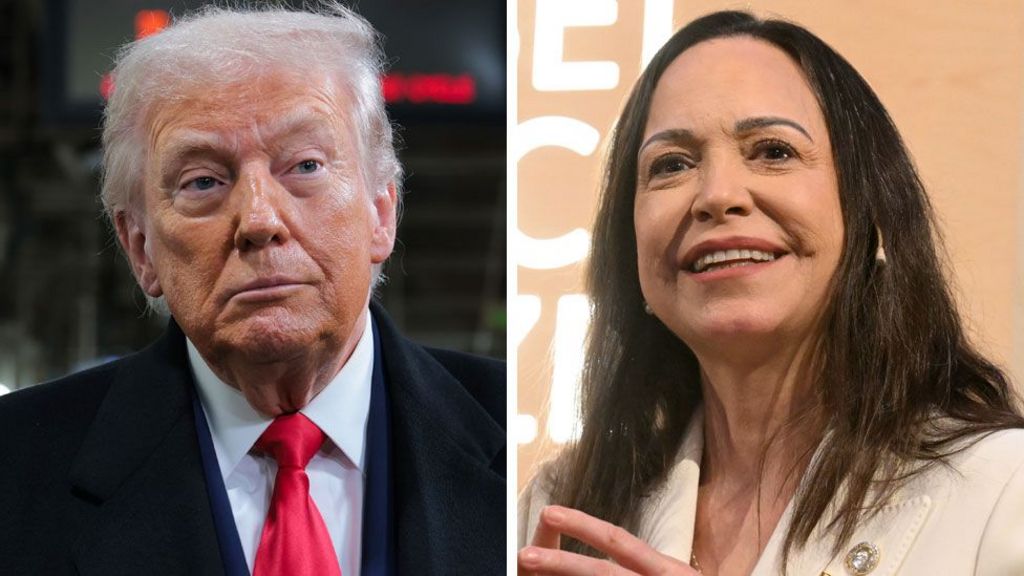
In a high-stakes diplomatic maneuver, Venezuelan opposition figure María Corina Machado is scheduled to meet with U.S. President Donald Trump at the White House on Thursday, aiming to reverse his recent endorsement of interim leader Delcy Rodríguez. The meeting follows Machado’s symbolic offer to share her Nobel Peace Prize—an honor Trump has publicly coveted—though the Norwegian Nobel Institute has confirmed prize transfer is legally impossible.
The political landscape shifted dramatically earlier this month when U.S. forces ousted Nicolás Maduro, whose reelection was widely condemned as illegitimate. Despite Machado’s landslide victory in the 2023 opposition primary and her decades-long democratic activism, Trump unexpectedly backed Rodríguez—Maduro’s former vice-president—claiming Machado lacked sufficient respect to lead.
Machado’s coalition argues Rodríguez represents continuity with Maduro’s abusive regime and seeks to convince Trump that his current alignment undermines democratic restoration. Conversely, Rodríguez supporters believe her transitional leadership prevents instability from armed colectivos and government loyalists who still control state institutions.
Venezuelans remain deeply divided: many view Machado as the legitimate democratic leader based on her primary victory and protest mobilization capabilities, while others fear immediate opposition rule could trigger violent backlash. Anonymous analysts suggest Trump’s intervention success actually stemmed from Machado’s years of weakening Maduro’s regime, noting that over 80% of Venezuelans desire political change unlikely under Rodríguez.
The Oval Office meeting represents a critical test of Trump’s unpredictable foreign policy approach, where personal diplomacy could reshape Venezuela’s fragile transition. Ultimately, Trump’s assessment may depend less on Machado’s arguments than on Rodríguez’s performance in coming weeks.