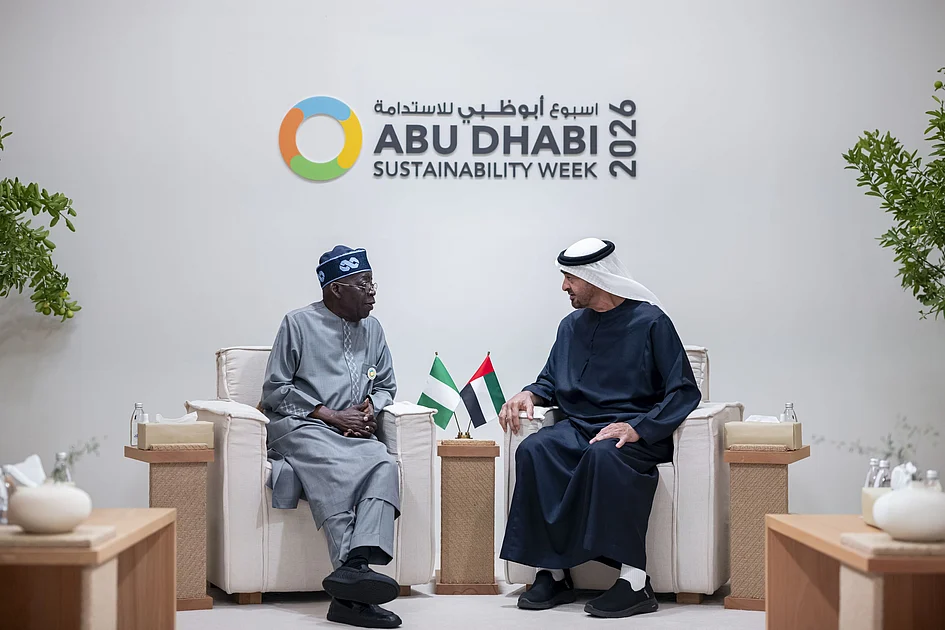
In a significant diplomatic ceremony held in Abu Dhabi on Tuesday, the United Arab Emirates and Nigeria solidified their economic relationship through the signing of a Comprehensive Economic Partnership Agreement (CEPA). President Sheikh Mohamed bin Zayed Al Nahyan of the UAE and Nigerian President Bola Ahmed Tinubu presided over the signing event, which marks a pivotal advancement in bilateral relations between the two nations.
The agreement, signed by UAE Minister of Foreign Trade Dr. Thani bin Ahmed Al Zeyoudi and Nigeria’s Minister of Industry, Trade and Investment Dr. Jumoke Oduwole, establishes a framework for substantially enhanced economic cooperation. The pact will systematically reduce tariffs and eliminate trade barriers, thereby facilitating increased investment flows across multiple strategic sectors including technology, agriculture, precious metals, and energy.
President Sheikh Mohamed characterized the agreement as a landmark development that reflects the UAE’s ongoing commitment to strengthening global trade partnerships. He emphasized that this strategic alignment aims to unlock new pathways for mutual economic progress and broader developmental objectives.
President Tinubu echoed these sentiments, highlighting the agreement’s potential to generate substantial opportunities for expanded economic and trade collaboration. He reaffirmed Nigeria’s dedication to achieving its national economic goals while simultaneously advancing the shared development priorities of both countries.
The economic context underscores the agreement’s significance: bilateral non-oil trade reached $4.3 billion in 2024, representing a remarkable 55.3% year-on-year increase compared to 2023. This growth trajectory continued through the first three quarters of 2025, with trade volumes already reaching approximately $3.1 billion.
The UAE-Nigeria CEPA constitutes a vital component of the UAE’s ambitious foreign trade strategy, which aims to boost non-oil foreign trade to $1.1 trillion by 2031. The CEPA program has already contributed to a record non-oil trade figure of $810 billion in 2024, marking a 14% annual increase. With 32 agreements finalized and 14 currently in force, the program demonstrates the UAE’s commitment to rules-based international trade as a mechanism for driving economic diversification and creating new opportunities for businesses in high-growth markets worldwide.