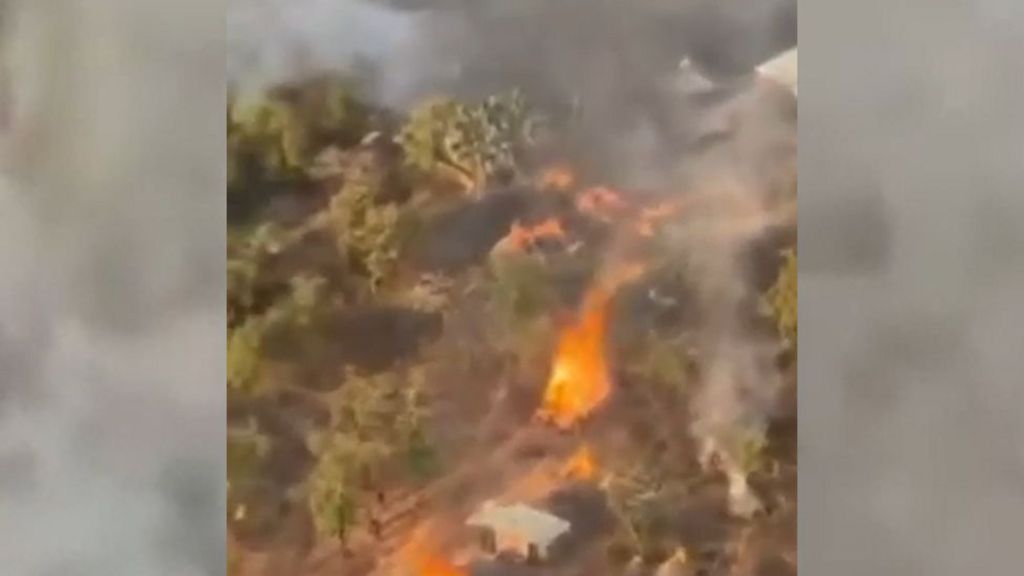
Nigerian security forces have launched a decisive multi-agency offensive against criminal networks in central Nigeria, resulting in the elimination of more than 200 suspected armed bandits according to official statements. The large-scale operation, which commenced on Saturday across densely forested areas of Kogi state, represents one of the most significant counter-insurgency actions in recent months.
Dramatic aerial footage captured by police helicopters and shared with international media shows extensive bandit encampments engulfed in flames as coordinated strikes targeted multiple hideouts. Kingsley Fanwo, Kogi State’s Information Commissioner, confirmed that several criminal bases were destroyed during the weekend operations involving combined Nigerian security and paramilitary units.
The offensive follows escalating national outrage over mass abductions, including targeted attacks on educational institutions that have plagued northwestern regions. While criminal elements have traditionally operated in Nigeria’s northwest, security analysts note their recent expansion into central states like Kogi, whose strategic forest corridors connecting northern and southern regions provide ideal terrain for cross-border criminal operations.
Security operations face particular challenges as bandits reportedly utilize kidnapped civilians as human shields to prevent full-scale assaults. “Security forces have put them in disarray wherever they try to regroup,” Fanwo stated, while acknowledging that “the bandits have kidnapped several individuals which they are using as human shields.”
The operation aligns with President Bola Tinubu’s recent directive to security chiefs to intensify efforts against armed groups. However, security expert Bashir Galma, a retired army major, cautioned that casualty figures might be exaggerated for political purposes with elections approaching, while conceding that surprise attacks could indeed yield significant results.
Nigeria’s complex security landscape includes not only kidnapping gangs but also Islamist insurgencies, resource conflicts, and separatist movements. International support has emerged with the United States military recently delivering “critical military supplies” to Abuja, emphasizing their “shared security partnership.” This follows December airstrikes by US forces against Islamist militant camps in northwestern Nigeria.
The government maintains that all citizens, regardless of faith, remain vulnerable to attacks in a nation with over 250 ethnic groups and mixed religious demographics. Foreign ministry spokesman Alkasim Abdulkadir recently reaffirmed Nigeria’s commitment to “protecting all citizens, Christians and Muslims alike, without discrimination” amid international concerns about religiously-motivated violence.