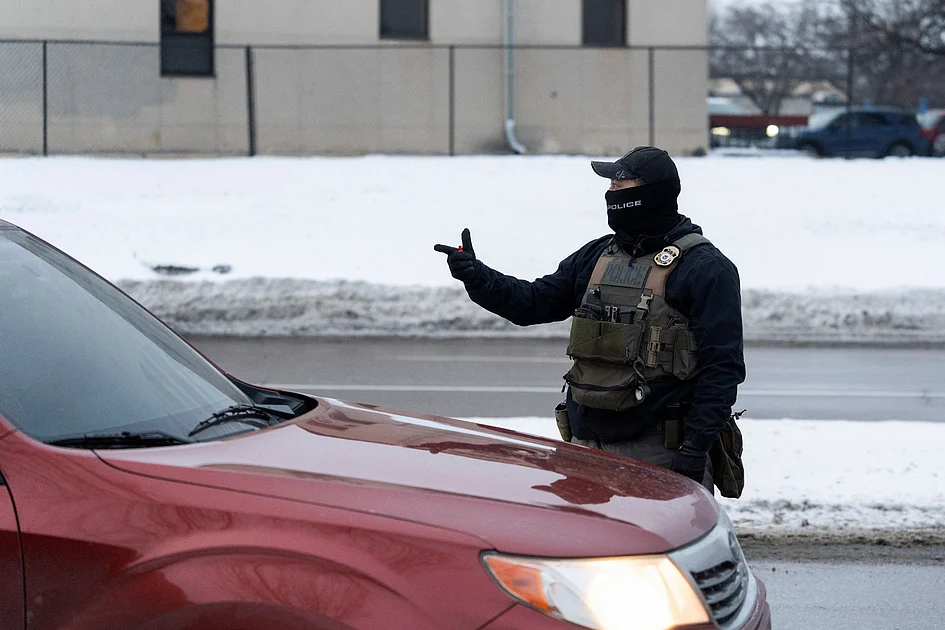
In a significant legal escalation against federal immigration policies, the states of Minnesota and Illinois have filed separate federal lawsuits against the Trump administration seeking to halt the deployment of additional immigration enforcement officers to their jurisdictions. The legal action comes in response to last week’s fatal shooting of 37-year-old mother Renee Good by an Immigration and Customs Enforcement (ICE) officer in Minnesota, which has sparked widespread protests and condemnation.
Minnesota Attorney General Keith Ellison has spearheaded the litigation, naming Homeland Security Secretary Kristi Noem and multiple immigration officials as defendants. The lawsuit petitions a federal court to declare the officer surge both unconstitutional and unlawful, alleging systematic racial profiling and political targeting of the Democratic-leaning state. Ellison characterized the deployment as ‘a federal invasion of the Twin Cities and Minnesota’ that has inflicted ‘serious harm’ on the state.
The Minnesota suit specifically seeks judicial mandates requiring federal officers to wear visible identification, activate body cameras, and refrain from obscuring their faces with masks. It further aims to prohibit the threat of physical force or brandishing of weapons against individuals not subject to immigration arrest.
Illinois filed parallel litigation seeking to block U.S. Customs and Border Protection from conducting civil immigration enforcement within state boundaries. Governor JB Pritzker denounced what he termed DHS’s ‘dangerous use of force,’ with the Illinois complaint requesting restrictions on tactics including tear gas deployment, trespassing on private property, and concealing license plates to mask official operations.
The legal actions follow dramatic confrontations between ICE agents and civilians in Minnesota, where Reuters journalists witnessed agents deploying tear gas, pepper balls, and chemical spray against crowds throwing snowballs during an immigration checkpoint incident. The tension reflects broader conflicts between the Trump administration and Minnesota dating back months, with the president having previously criticized the state’s Democratic leadership and Somali-American community in inflammatory terms.
Both states are seeking immediate temporary restraining orders against the federal enforcement surge, with Minnesota scheduled for an emergency hearing as early as Tuesday.