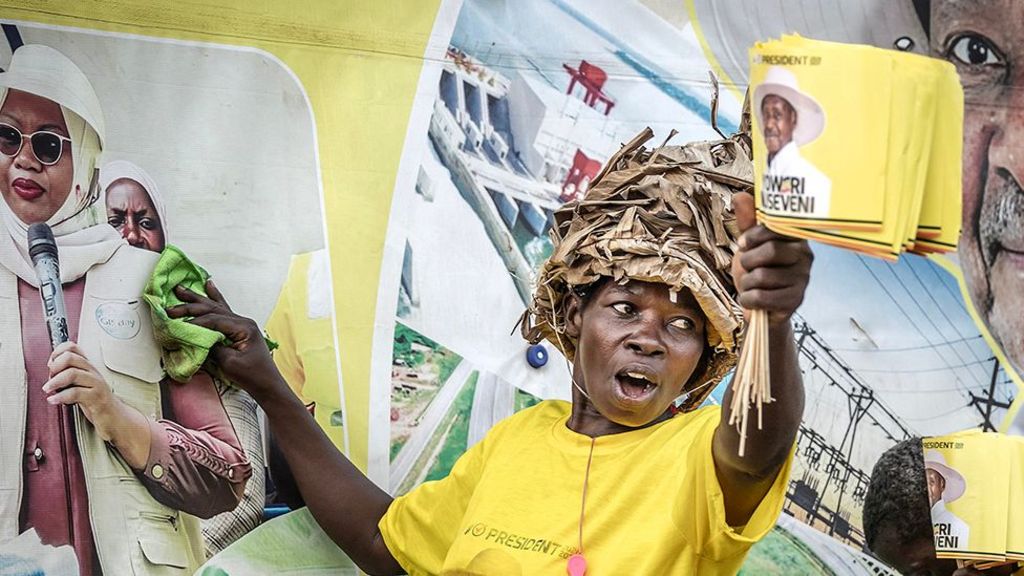
Uganda stands at a political crossroads as its youthful population dominates election campaigns, creating a vibrant tapestry of contrasting ideologies ahead of Thursday’s pivotal presidential vote. The nation, with a median age of just 17, witnesses unprecedented political engagement from a generation that has known only one leader throughout their lives.
President Yoweri Museveni, 81, seeks an extraordinary seventh term after four decades in power, campaigning under the ruling National Resistance Movement’s banner of ‘Protecting the Gains.’ His administration emphasizes stability and continuity, highlighting Uganda’s transformation from a refugee exporter to Africa’s largest refugee host. NRM spokesperson Emmanuel Lumala Dombo articulates this vision while defending the party’s record.
Challenging the status quo is 43-year-old former pop star Bobi Wine (Robert Kyagulanyi), whose National Unity Platform mobilizes supporters with the urgent cry of ‘Protest Vote.’ He has emerged as the primary conduit for youth frustration, framing the election as a battle for liberation and freedom. Despite their opposing messages, both campaigns strategically target Uganda’s massive youth demographic.
The political landscape reveals a profound paradox: one of the world’s youngest populations governed by aging elites who have consistently outmaneuvered constitutional limits. This tension reflects a broader African pattern where youthful societies remain under the control of long-established leadership.
Uganda’s youth bulge represents both tremendous potential and significant risk. Hundreds of thousands enter the labor market annually, yet economic opportunities remain scarce. Political expression often meets with arrests, intimidation, and violence—responses that have deepened rather than suppressed public anger.
Regional context amplifies these tensions. Youth-led protests in Kenya, emerging activism in Tanzania, violent unrest in Mozambique, and Madagascar’s military takeover after presidential flight demonstrate a continent-wide pattern of youthful political awakening. Ugandan authorities closely monitor these developments while implementing what many observers describe as a ‘managed security operation’ rather than a genuine legitimacy contest.
Research fellow Fergus Kell of Chatham House notes the ‘heavily militarized’ nature of Ugandan politics, where state machinery suppresses alternative power centers. The UN human rights office reports widespread repression against opposition figures, journalists, and dissenting voices, while academic Kristof Titeca describes ‘rituals of democratic competition’ with ‘predetermined outcomes.’
Beyond the two main contenders, traditional opposition parties like the Forum for Democratic Change and Democratic Party continue participating but struggle with internal divisions and limited appeal to younger voters seeking more confrontational approaches.
The election raises fundamental questions about Uganda’s political future, particularly regarding succession. Speculation about Museveni’s retirement plans has persisted for 25 years, with each hint of departure followed by constitutional amendments removing term and age limits. Recently, attention has focused on General Muhoozi Kainerugaba, the president’s son, whose rapid military advancement and political activities through his Patriotic League of Uganda suggest potential hereditary transition planning.
NRM officials downplay succession theories, emphasizing established party processes, while Bobi Wine remains skeptical, drawing parallels with Zimbabwe’s Robert Mugabe. The election ultimately transcends individual candidates, becoming a referendum on preserving historical achievements versus embracing a new generation’s demand for inclusion, fairness, and meaningful participation. Uganda’s youth have unequivocally transitioned from passive observers to active political participants.