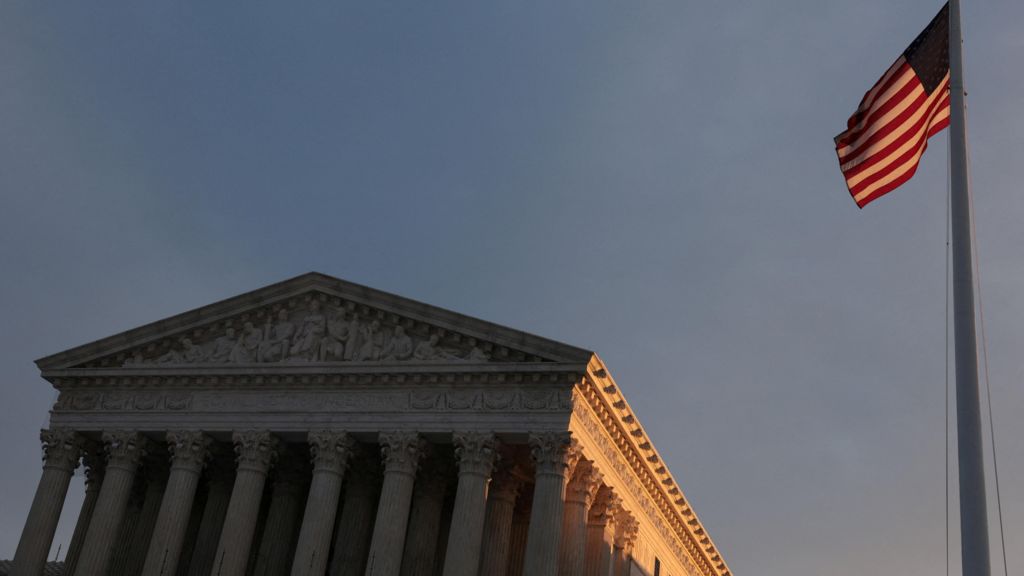
With an imminent Supreme Court decision threatening to unravel his signature trade policy, President Donald Trump has publicly expressed apprehension about potential legal and financial repercussions. The President took to his Truth Social platform on Monday, characterizing a potential adverse ruling as catastrophic for national security and economic stability.
The legal challenge, spearheaded by coalitions of small businesses and multiple U.S. states, contests the constitutional validity of tariffs first implemented by the Trump administration last April. Plaintiffs argue the President exceeded his executive authority by imposing sweeping import taxes under the International Emergency Economic Powers Act (IEEPA)—a 1977 statute that notably omits any explicit mention of tariff implementation.
Financial stakes are substantial: IEEPA-mandated tariffs have generated approximately $130 billion in revenue, constituting more than half of all tariff collections. A ruling against the administration could compel the federal government to refund billions to affected businesses, a prospect Trump described as ‘almost impossible for our Country to pay.’
The judicial landscape appears ominous for the administration. Prior to reaching the Supreme Court, two lower courts already ruled against the presidential authority to impose such global tariffs. During November hearings, even several conservative justices—including Trump-appointed Justice Amy Coney Barrett—expressed skepticism toward the White House’s legal justification. Barrett notably concurred with Trump’s assessment that refund processing would create a ‘complete mess,’ terminology the President subsequently adopted.
The administration maintains that tariffs are essential for revitalizing American manufacturing and addressing trade imbalances. White House officials have indicated they will pursue alternative legislative avenues should the court rule unfavorably, including existing provisions permitting temporary 15% tariffs for 150-day periods.
Business communities domestically and internationally await the decision with acute interest. Many enterprises, having absorbed substantial financial impacts from the trade policies, anticipate potential compensation through refunds—though some acknowledge monetary reimbursement cannot offset broader market disruptions caused by the prolonged trade conflict.