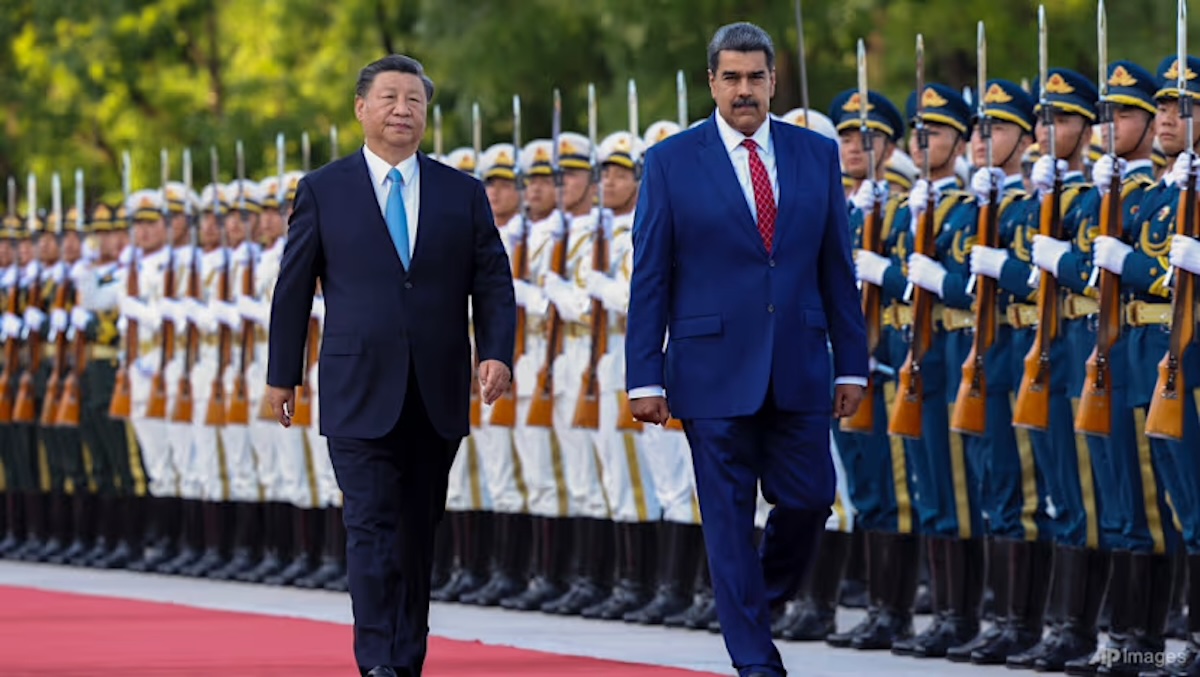
The United States’ covert operation to apprehend Venezuelan President Nicolás Maduro and its subsequent moves to seize Venezuelan oil assets have triggered significant geopolitical repercussions, particularly across Asian nations. This development has prompted serious examination of Washington’s strategic priorities and their implications for regional security dynamics.
Historical narratives depicting America as a benevolent global power promoting universally beneficial rules now face intense scrutiny. The Maduro operation, coupled with explicit statements from the Trump administration regarding Venezuelan oil acquisition, has substantially damaged US credibility throughout the Global South, including key Asian partners. China’s diplomatic and propaganda machinery has effectively capitalized on this situation to amplify anti-American sentiment.
While European allies have expressed notable discomfort, Asian partners demonstrate more measured responses. Both Japanese and South Korean governments have refrained from outright condemnation of US actions in Venezuela. Japanese Prime Minister Sanae Takaichi carefully avoided direct criticism, with senior officials primarily concerned about potential dilution of international resolve against Chinese expansionism in Asia. Similarly, South Korea’s Democratic Party-led administration issued a neutral statement urging all parties to reduce regional tensions.
The Venezuela intervention potentially signals a strategic reorientation toward Western Hemisphere priorities, which would objectively benefit Moscow and Beijing by diverting American resources from Asian theaters. However, this doesn’t necessarily indicate complete victory for isolationist ‘restrainers’ over China-focused ‘prioritizers’ within US policy circles. The current National Security Strategy maintains commitment to preventing Chinese dominance in Asia, representing a scaled-back but still active engagement posture.
Fundamentally, both Washington and Beijing pursue contradictory sphere-of-influence objectives while rejecting each other’s claimed domains. China’s naval expansion into Pacific island territories, unexpected military exercises near Australia, and previously robust Venezuelan relations demonstrate Beijing’s willingness to operate in America’s strategic backyard, mirroring US presence in China’s periphery.
Legal analysts note the Maduro operation violates international law, potentially creating dangerous precedents for Russian and Chinese actions. However, historical context reveals numerous US interventions in Latin America throughout the previous century, making this less a novelty than a continuation of established practice. Neither Moscow nor Beijing have shown particular restraint regarding international norms, as evidenced by Russia’s Ukraine invasion and China’s rejection of UNCLOS rulings in the South China Sea.
The Venezuela operation unlikely strengthens deterrence against Chinese adventurism regarding Taiwan. While demonstrating willingness to take limited military action against weaker opponents, the Trump administration has consistently expressed reluctance about defending Taiwan and seeks bilateral trade agreements with China, creating disincentives for confrontation.
Potential mission creep in Venezuela could mirror Somalia’s 1992-93 intervention, where humanitarian purposes devolved into combat operations. Sustained military engagement in Latin America would inevitably divert resources and administrative attention from Asian security concerns, while reinforcing American war weariness that might discourage future intervention in Taiwan Strait scenarios.
Ultimately, China’s regional calculations follow their own strategic logic rather than reacting to global norm violations. The Venezuela intervention represents just one factor in complex Asia-Pacific security equations, with limited but notable impact on regional perceptions of US commitment and reliability.